If just a few years ago a road near the front line was simply a road, today it is a space that is constantly being “scanned.” From the air, from a distance, without human involvement. A drone does not need to fly close enough - it only needs to hover, detect movement, transmit coordinates, and disappear. What follows is a chain of events that is almost impossible to stop.
In this situation, a vehicle appears highly vulnerable. It moves predictably and is often forced to travel the same routes repeatedly. Even if the crew acts carefully, the risk remains. And with each passing day, it only increases because drones are becoming cheaper, more widespread, and smarter, which leads to their growing numbers.
Vehicle-mounted EW systems emerged as a response to this threat and as an attempt to change the rules of the game, at least partially. They do not eliminate the threat completely, but they make it possible to interfere with a drone’s operation before it completes its mission. In real conditions, this is sometimes enough to gain time, change a route, or simply avoid being detected at a critical moment.
What Is a Vehicle-Mounted EW System
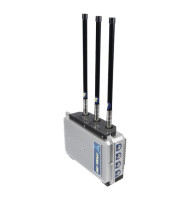
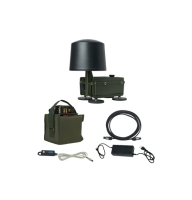
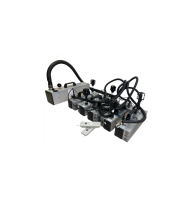
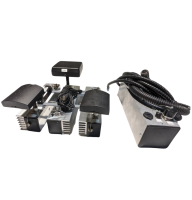
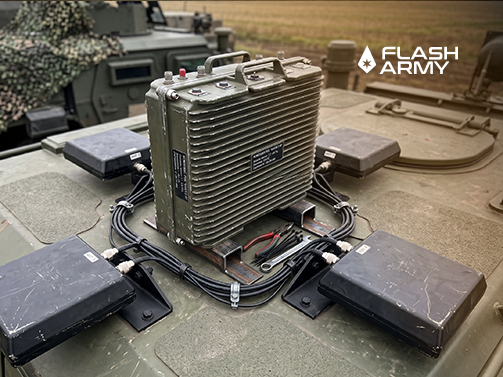
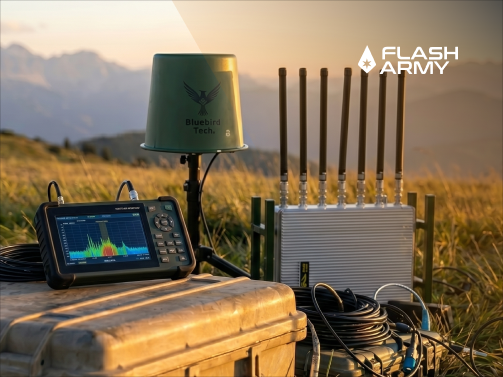
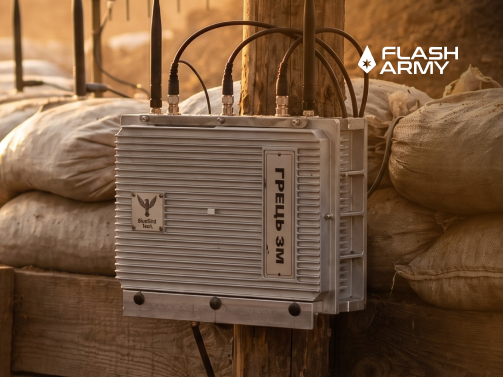
A vehicle-mounted EW system is an electronic warfare device installed on a vehicle and operating directly while driving or stationary. Its purpose is not to physically destroy anything. Its task is to make the radio environment around the vehicle unsuitable for the normal operation of drones. In simple terms, a vehicle-mounted EW system creates active interference on the frequencies where UAVs receive commands, transmit video, and navigate. The drone effectively finds itself in a fog: communication becomes unstable, coordinates drift, and responses to commands slow down or disappear completely.
It is important not to confuse its purpose. A vehicle-mounted EW system does not make a vehicle invisible and does not guarantee absolute safety. It is a tool of influence rather than complete protection. Its effectiveness always depends on how accurately the frequencies, power, and configuration are selected for specific conditions.
Another point that is often overlooked is that a vehicle-mounted EW system does not operate only once or through a short pulse. It creates a continuous zone of influence around the vehicle, and it is this zone that complicates aerial reconnaissance during movement.
Where Vehicle-Mounted EW Systems Are Used
The most obvious scenario is movement near active combat zones. This may involve evacuating wounded personnel or civilians from dangerous areas, delivering ammunition, food, equipment, or supplies. In such conditions, a drone often appears faster than the crew can notice it, and any delay may have consequences.
A vehicle-mounted EW system helps reduce the effectiveness of such reconnaissance. Even if a drone is already operating in the area, disrupting its communications or navigation forces the operator to spend time, change altitude, or stop observation altogether.
A separate category is specialized transport. Command vehicles, mobile control centers, engineering vehicles, and unmanned ground systems. These are not simply vehicles but platforms carrying command, communications, or critical equipment. For such vehicles, a vehicle-mounted EW system becomes a basic element of security rather than an optional addition.
Vehicle-mounted EW systems are also increasingly used by volunteer crews. When a route is repeated every day or every other day, drones adapt very quickly. Passive concealment methods lose effectiveness, making active interference with the radio spectrum a logical next step.
Operating Principle and Advantages of EW Systems
The operating principle of a vehicle-mounted EW system is based on the continuous transmission of signals within specified frequency ranges. The system generates radio noise that blocks or distorts the useful signal between the drone and its operator. For the UAV, this appears as a sudden deterioration in communication quality. In practical terms, this means a loss of stability. The drone may respond with delays, lose coordinates, transmit video incorrectly, or activate emergency algorithms. All these scenarios reduce its effectiveness as a reconnaissance or strike platform.
The strong advantage of EW systems mounted on vehicles is autonomy. Once activated, the system operates independently without driver involvement. This is important because, when traveling through a dangerous area, the crew’s attention should remain focused on the road rather than on managing equipment.
The main advantages for which vehicle-mounted EW systems are used include:
- reducing the likelihood of prolonged aerial surveillance;
- complicating fire adjustment and strike coordination;
- providing additional time for maneuvering or leaving a dangerous area.
What to Consider When Choosing
It is worth stating immediately that choosing a vehicle-mounted EW system is always a compromise. There is no system that works equally well in all conditions and against all types of UAVs. Therefore, it makes sense to start not with specifications but with an understanding of where and how the system will be used.
Before deciding to buy a vehicle-mounted EW system, it is worth considering the route, trip duration, type of vehicle, and nature of the threats. Only after that do the technical parameters begin to have real meaning.
Frequency Range
The frequency range determines which drones the vehicle-mounted EW system can affect. Most UAVs use standard command-and-control and satellite navigation frequencies, but the combinations may vary. The wider the coverage spectrum, the more scenarios the system can address. At the same time, this means a more complex system and higher power requirements.
Effective Operating Radius
The operating radius determines the distance at which the system can realistically affect drones. For moving vehicles, it is important that the influence zone extends not only above the vehicle itself but also around it. An excessive radius is not always justified. In real conditions, stable operation is more important than maximum numbers.
Power Consumption
A vehicle-mounted EW system consumes a significant amount of power, especially during prolonged operation. This creates a load on the battery and the entire electrical system of the vehicle. If this factor is ignored, even an effective EW system can create more problems than benefits.
Design Features
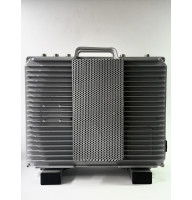
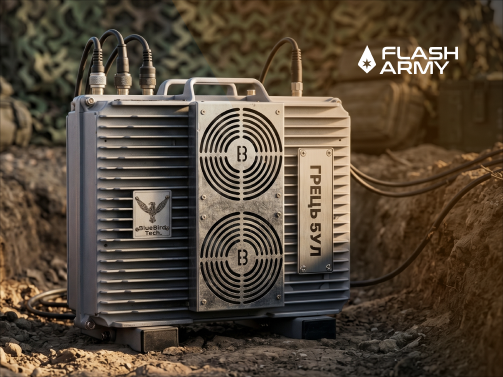
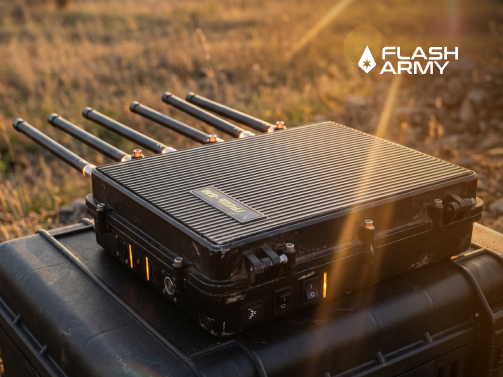
Field conditions involve dust, moisture, vibration, and temperature fluctuations. The housing of a vehicle-mounted EW system must be prepared for these challenges. Ease of installation and maintenance is often more important than compact size or appearance.
Antenna Types
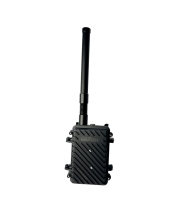
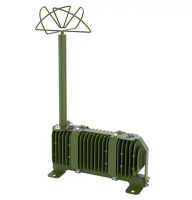
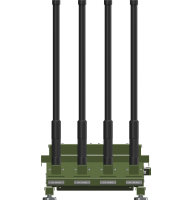
Antennas determine the coverage area of the system. Omnidirectional antennas create circular coverage, while sector antennas allow stronger influence in a specific direction. Even a high-quality vehicle-mounted EW system will lose effectiveness if the antennas are installed incorrectly.
Conclusion
A vehicle-mounted EW system is not universal protection and not a guarantee of safety. It is a tool that helps reduce risks in conditions where drones have become a constant threat. A vehicle-mounted EW system performs best when selected for specific tasks and used with a clear understanding of its capabilities and limitations.
If you plan to buy a vehicle-mounted EW system, it is worth considering solutions from Flash Army, where various EW systems are available for specific scenarios. A properly selected vehicle-mounted EW system does not provide an absolute guarantee, but it often provides what is most valuable today - time and opportunity.