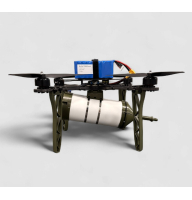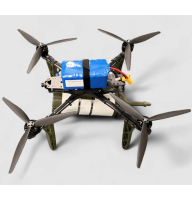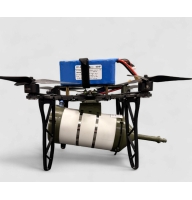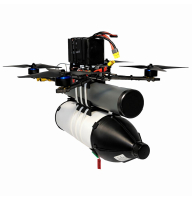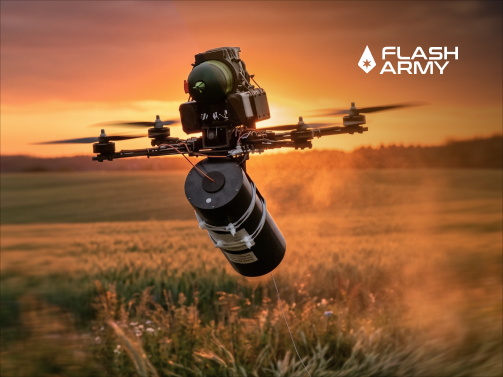
Drones on fiber optics — are nothing new. The enemy is actively using them on the front line, as well as for attacks on frontline cities. This has significantly limited the capabilities of classic FPV drones and forced to look for alternative solutions for detection and countermeasures.
Since the principle of signal transmission via fiber optics is different from conventional radio-controlled platforms, traditional electronic warfare means are ineffective against such drones. Despite these challenges, there are still methods for detecting a drone on fiber optics. We will talk about them in this material.
What are fiber-optic drones and how do they differ from conventional ones
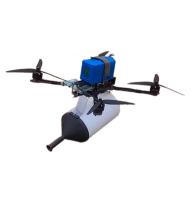
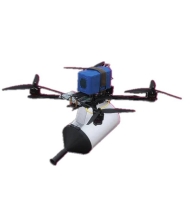
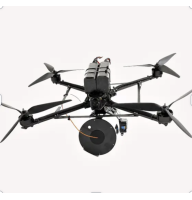
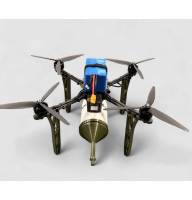
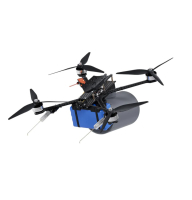
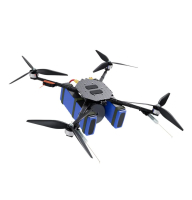
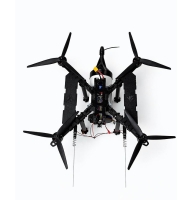
Fiber-optic drones — are a type of FPV drones that are controlled and transmit video via a thin optical cable. During the flight, the cable is gradually unwound from a special reel located on the drone itself, maintaining a physical connection with the operator's ground station.
The main feature of such drones is the data transmission method. It is carried out not via radio waves, but via light signals inside the optical fiber. That is why fiber-optic drones are absolutely resistant to detection by electronic warfare systems. It is also impossible to intercept control or a video signal over the air.
Another difference is the drone design. In addition to standard components, a fiber-optic drone is equipped with a special cable reel that ensures continuous data transmission during flight. This makes the design more complex and affects the mass and layout of the device.
How acoustic drone detection systems work
At first glance, it may seem that drones on fiber optics cannot be detected at all, except by seeing them on approach. Often this is really a "task with an asterisk", but there is a solution. For this, acoustic sensors are most often used.
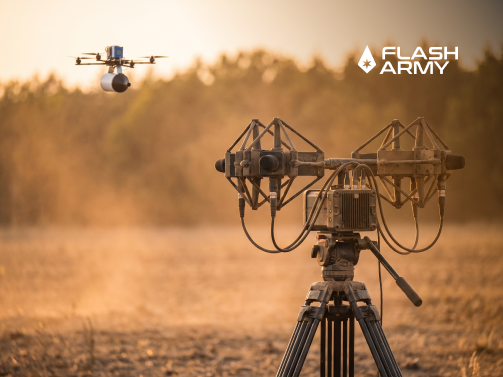
As the name suggests, these devices work with sound waves created by the drone's engines and propellers during flight. At the heart of the acoustic sensor is an array of highly sensitive microphones that continuously record environmental sounds. The resulting audio data is transmitted to software, where it undergoes digital processing. This is done using artificial intelligence, which cleans the recording of background noise and compares the spectrum, intensity and nature of the sound with a database. If these parameters match the characteristics of the FPV drone, the system can generate a message about a potential threat.
How effective are acoustics against drones on fiber optics
Acoustic systems have proven their effectiveness in detecting drones on fiber optics. The cable does not affect the sound created by the drone's engines and propellers. That is why, if the drone is in the range of the acoustic sensors and the noise level is sufficient for registration, the equipment can record and classify it.
However, such a fiber-optic drone detector has certain limitations that should not be forgotten. Its operation may depend on factors such as weather conditions, wind strength, rain, terrain, etc. In addition, the detection range is usually only 100-450 meters. Thus, acoustic systems are considered not as a universal solution, but as one of the components of a comprehensive approach.
Additional methods of drone detection
There are also other technologies that help detect fiber-optic UAVs. Let's consider them in more detail.
- Radar systems.
Radar systems see aerial objects using electromagnetic waves. They emit a radio signal and analyze its reflection from the drone. Based on the data received, the device can determine the presence of a target, its approximate location, and track its movement.
- Optical surveillance.
Optical systems receive images of objects in real time using a high-resolution video camera. They are mainly used to confirm the results obtained by other monitoring means.
- Thermal imaging systems.
Thermal imaging systems form an image based on infrared radiation, which is created by objects with a temperature above absolute zero. How does this work with fiber-optic drones? Thermal imaging cameras (both handheld and mounted on interceptor drones) capture the thermal radiation from UAV engines against a cooler sky or ground. This allows such equipment to be used as a complement to conventional optical cameras, expanding the capabilities of 24/7 monitoring.
Conclusion
Thus, fiber-optic drones remain a serious challenge in modern warfare. No technology to detect them is not universal and cannot guarantee 100% efficiency. Only a combination of several observation methods allows you to get a more complete picture of the air situation and respond to potential threats in a timely manner.
On the other hand, the development of unmanned technologies stimulates the constant search for new solutions. While we wait for the emergence of reliable Ukrainian developments, you can order acoustic drone detection modules at Flash Army.