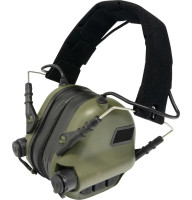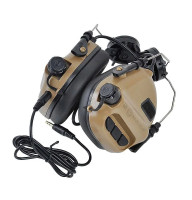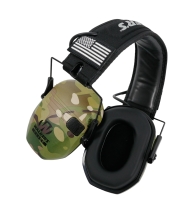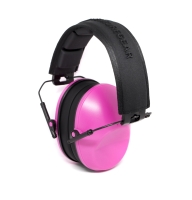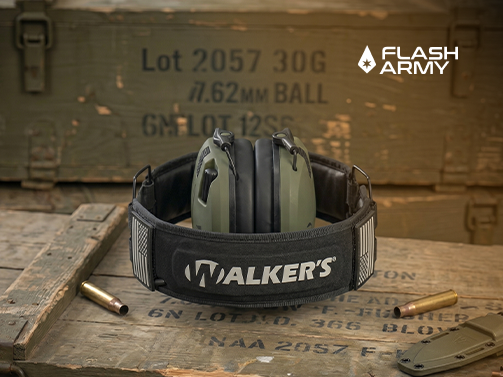
Many people have experienced ringing in their ears after a few shots at the shooting range or a day of training. Now imagine a soldier spending months in such noise. Hearing is not something that can be "replaced," which is why tactical headphones have become an essential part of equipment. They protect against excessive noise but do not cut a person off from the surrounding world.
In this article, we will figure out what tactical and active headphones are, how they work, what types there are, and what to look for when choosing. And most importantly, we will give simple tips to avoid wasting money.
What are tactical and active headphones
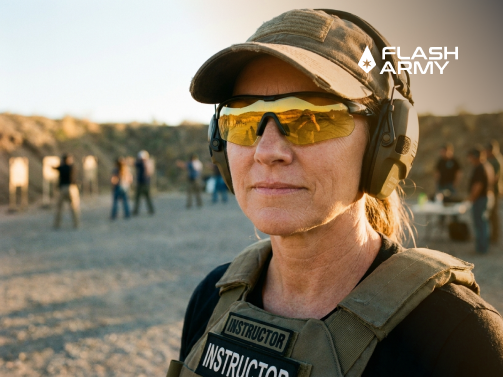
Tactical headphones are specialized headsets that combine several functions at once: hearing protection, quality communication, and ease of use in any conditions. These are not just "large headphones with cushions," but well-thought-out military equipment created with the specifics of field conditions in mind.
Many people confuse passive and active models. Active headphones are no longer just a physical barrier between the ear and noise. These are devices with microphones and electronics that monitor the environment and control what you hear. If a shot goes off behind you, they will instantly muffle the sound. And if someone is talking nearby, you will hear the voice clearly, as if without headphones.
So, to briefly explain what active headphones are: it's a technology that "filters" the world around you. Dangerous sounds are muffled, necessary ones are left. Thanks to this, you are protected but not cut off from reality.
How they work
The principle of active models is quite simple, although it seems like "magic." Microphones are located in the housing, constantly "listening" to ambient noise. A special processor analyzes the sound and decides what to do: amplify a quiet signal (e.g., footsteps or whispers) or muffle a sharp burst (a shot, an explosion).
Passive models work differently. They act as a barrier due to thick ear cushions and sound-absorbing materials. This also works, but with this approach, you simply cut yourself off from the world. Sometimes this is good (e.g., when working with a jackhammer), but in military or tactical situations, it is dangerous.
That is why professionals are increasingly asking not just "do I need headphones," but more specifically: how to choose active headphones to preserve hearing and stay connected.
Key features
To avoid getting lost among many models, it is important to know what to look for first:
- Sound insulation and noise reduction. This determines how effectively your ears will be protected. A good model blocks harmful decibels but does not make everything around a "silent picture."
- Comfort. If the headset presses or rubs, you won't be able to use it for long. Pay attention to the weight, softness of the ear cushions, and headband adjustment.
- Microphone and acoustics. For military personnel and security guards, this is critical. The voice must be clear, without interference. Speakers must reproduce sound without distortion.
- Battery. Active models run on rechargeable batteries or disposable batteries. The longer they hold a charge, the less risk of being left without protection at an important moment.
- Housing protection. Water resistance and dust resistance are basic things for those who work outdoors or in the field.
Many people have experienced ringing in their ears after a few shots at the shooting range or a day of training. Now imagine a soldier spending months in such noise. Hearing is not something that can be "replaced," which is why tactical headphones have become an essential part of equipment.
There are two main types:
- Passive. This is the simplest option. They are similar to industrial noise-canceling "earplugs," effectively muffling sound, but you become "cut off" from the whole world. Suitable for construction or hobbies, but not for combat.
- Active. These have become the standard for the military and hunters. Such headphones not only protect but also help you hear.
Here the question often arises: how to choose active headphones and which active headphones should I choose? It all depends on the tasks. If it's about shooting at the range a few times a month, a simpler model can be chosen. But if you are a soldier or work in security, you need a headset with a durable housing, a good microphone, and the ability to connect to a two-way radio.
Wireless options are convenient because the cable doesn't get tangled. But wired ones are more reliable in critical conditions. Here it's a matter of personal priorities.
How to choose active headphones for military personnel
In military conditions, the requirements are significantly higher. The "just protect somehow" option is not suitable here. The headset must always work.
- Hearing protection. Explosions and gunshots are daily routines. Therefore, the noise reduction level must be maximum, but without losing the ability to hear voices.
- Compatibility. The headset must easily connect to two-way radios and communication systems — via cable or wirelessly. Without this, it turns into an expensive noise-canceling accessory.
- Durability. A soldier doesn't think about where to put headphones. They fall in mud, get caught in rain and dust. Therefore, water resistance and a durable housing are not a whim, but a necessity.
In short, the answer to the question of how to choose active headphones for military personnel comes down to three words: reliability, compatibility, and comfort. Only then will the headset truly become a working tool, not a burden.
Who benefits from them
Although it seems that tactical headphones are created only for the military, in practice, the range of users is much wider.
Hunters. Headphones help hear even a quiet rustle in the forest, but at the same time muffle the sound of a shot.
- Sport shooters. At the shooting range, this is a mandatory attribute — otherwise, after a few training sessions, you can be left with damaged hearing.
- Security guards. A headset with a microphone allows communication in noisy conditions and staying in touch with colleagues.
- Builders. Passive models are more often used here, but the principle is the same — to preserve hearing in a loud environment.
Why invest in active ones
Simply put: because they are multifunctional. Instead of carrying separate "earplugs" and a communication headset, you get two in one.
- They genuinely preserve hearing.
- They allow you to hear around you — this is a matter of safety, not comfort.
- They provide quality communication with the team.
- They work both wired and wirelessly.
- Modern models are lightweight, comfortable, and don't feel heavy on the head even after several hours.
Conclusion
Tactical headphones are primarily about safety and effectiveness. This type of military equipment saves hearing, allows you to hear around you, and does not interfere with work. Understanding that active headphones are not just a "fashionable headset" but a survival tool helps make the right choice.
Remember: active headphones are not a luxury, but a way to preserve hearing and life. So, if the question is which active headphones to choose, you should start from the tasks and conditions in which you work.
In the Flash Army catalog, you will find proven tactical headphones and other military equipment that meets modern requirements for reliability, comfort, and safety.