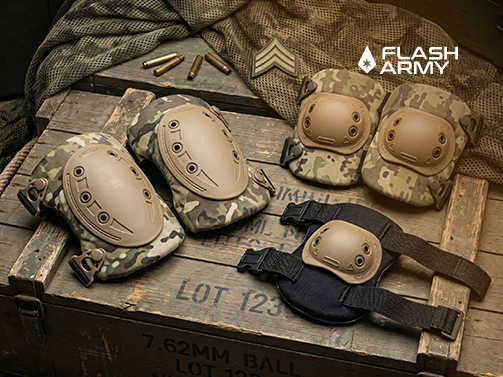
Knees are a body part that is constantly at work. Running, squatting, jumping, falling — all the stress goes directly to the joint. If you serve in the military, engage in tactical training, or simply spend a lot of time outdoors in active games, you know for sure: one bad fall can put you out of commission. And then no training or service will be possible.
To avoid this, you should use tactical knee pads. They are designed specifically to absorb impacts and loads, keeping the joint safe. So, how do you choose tactical knee pads that actually work, instead of just sitting in your backpack?
What are tactical knee pads and what are their benefits
Essentially, these are protective "cups" for the knees, made of hard material on the outside and soft on the inside. They attach to the leg with straps, Velcro, or fasteners and stay in place without hindering movement.
Unlike sports or construction models, military knee pads are designed for intensive use. This means they won't be damaged by rain, sand, or constant impacts against asphalt or concrete. Their strength and wear resistance are significantly higher.
And the main difference is in the feel: with them, you can crawl for a long time, fall on hard surfaces, work in field conditions — and not be afraid that your knees will simply "give out."
Main functions
Knee pads perform several tasks at once:
- Protection. They absorb impact force and prevent joint damage.
- Cushioning. Thanks to the inner layer, impacts are less noticeable, and knees get less tired.
- Support. They distribute the load, which is especially important during long marches or training.
- Comfort. They allow you to work on your knees or run without pain or excessive pressure.
Believe me, after an hour in a kneeling position without protection, you will immediately understand how essential knee pads are.
Materials: what reliability depends on
Materials play a key role. Here, it's important to look not only at the hard "cup" but also at the inner part.
- Outer layer. Most often, it's polymer plastic or rubber. It absorbs impacts and contact with hard surfaces.
- Inner layer. Foam, nylon, or special inserts are used here, responsible for comfort and cushioning.
- Straps and fasteners. They must also be strong, otherwise, the knee pad will fly off at the first tug.
For military personnel, wear resistance is especially important. Poor material can crack after just a few weeks of active use. Quality knee pads will last for years.
Fastening and adjustment
Without proper fastening, even the best knee pad won't do its job.
- Velcro. Very convenient for quick donning. But if you work in sand or mud, they can lose their grip.
- Buckles. More reliable, but take longer to secure. Well-suited for long-term use.
- Combined options. A convenient balance for those who want both speed and reliability.
The main thing is proper adjustment. If the strap is too tight, it will chafe and hinder blood circulation. If it's loose — the knee pad will slip during movement.
How to determine knee pad size
This question is often underestimated, but it determines whether you will be satisfied with your purchase.
How to determine knee pad size? Measure the circumference of your leg slightly above the knee. Most manufacturers provide sizing charts. But even then, it's better to try on the model in person to ensure comfort.
A knee pad that is too large will slip. One that is too small — will start to press and chafe. All this will lead to you simply taking it off and leaving it at home.
How to choose tactical knee pads: practical advice
When it comes to choosing knee pads, consider:
- Purpose. For field exercises, daily service, or tactical games.
- Materials. Choose models with polymer plastic and a quality inner layer.
- Cushioning. Make sure the inner pad is soft enough.
- Fastening. Convenience and reliability are key parameters.
- Comfort. If it's uncomfortable from the first minute — it will only get worse.
Remember: even the most durable models will be useless if they "fit" incorrectly.
Conditions of use: where the difference shows
The choice largely depends on where you will wear them.
- Training ground or combat conditions. Here, maximum durability, protection from sand, dirt, and waterproofing are needed.
- Gym training. Lighter models can suffice; the main thing is comfort and mobility.
- Tactical games (airsoft, paintball). Combined options are suitable, balancing protection and lightness.
It's important to consider the season. In summer, ventilation is needed; in winter — a snug fit so the knee pads don't slip over clothing.
Common mistakes when choosing
Experience shows that beginners often make several common mistakes:
- They buy the cheapest models and wonder why they break after a month.
- They focus only on appearance, not on materials or comfort.
- They ignore size and fastening.
- They use sports knee pads instead of tactical ones in field conditions.
This is easy to avoid if you remember a simple rule: knee pads are a part of military equipment, not an accessory "for looks."
Who are knee pads suitable for
- Military personnel. Maximum durable models with polymer plastic that will withstand any conditions.
- Athletes. Lightweight and comfortable with an emphasis on cushioning.
- Airsoft or paintball enthusiasts. More versatile, with an emphasis on mobility and comfort.
Thus, the answer to the question of which knee pads to choose depends on your specific tasks.
Conclusion
Tactical knee pads are not a trifle. They genuinely affect your safety, comfort, and even effectiveness in action. When choosing them, remember three things: materials, fastening, and the correct size. And then — everything depends on your conditions and needs.
If you are still wondering how to choose tactical knee pads, the advice is simple: focus on practicality. Try them on, test them in motion, don't skimp on quality. And then they will become your reliable protection for many years.
In the Flash Army catalog, you will find proven tactical knee pads, as well as other military accessories and military equipment that have already proven their effectiveness in real conditions.