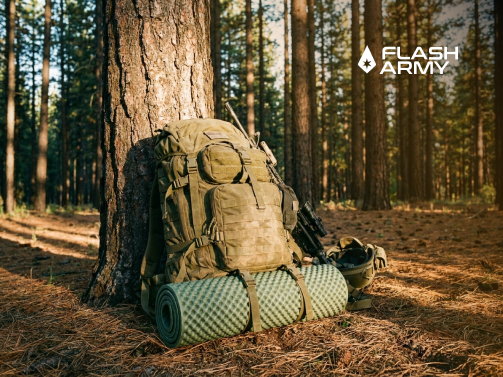
The concept of a military go-bag has long ceased to be a formality. It is not just a collected set of items for emergency situations, but a well-thought-out system on which a person's autonomy, speed of reaction, and safety depend in combat or crisis conditions. In reality, a go-bag often becomes the only resource for the first few hours or even a day.
When the question arises of what should be in a go-bag, it is important to abandon illusions. There is no universal list for every occasion, but there are principles that allow you to collect items for critical situations. A properly assembled go-bag, including all military accessories, is always a compromise between the necessary minimum and mobility.
Key Principles of Equipment
The first principle is lightness and mobility. The backpack should not be heavy, dragging you down and changing your posture. In combat conditions, excess weight quickly turns into fatigue, and fatigue into mistakes and a risk to health and life. Therefore, each item must justify its place.
The second principle is reliability and durability. In stress, there will be no opportunity to quickly replace or repair something. If a piece of equipment breaks after a few uses, it becomes not just useless, but dangerous. That is why the contents of a go-bag are always selected with real loads in mind, not appearance or brand.
The third principle is versatility. One item - multiple functions. This approach allows you to reduce weight without losing capabilities. Versatility does not mean a compromise in quality; it means practicality and common sense.
Recommended Equipment List
Documents and Identification Means
Documents are the first thing that should be in a go-bag, not only for military personnel but also for civilians. IDs, dog tags, medical information, contact details - all this may be needed in the first minutes after an injury or evacuation. Often, the presence of these items determines the speed of decision-making.
It is important to store documents in sealed cases or waterproof bags. This is a small detail, but it can solve many problems. Moisture, dirt, or mechanical damage are typical conditions, and you need to be prepared for them.
Personal Protective Equipment
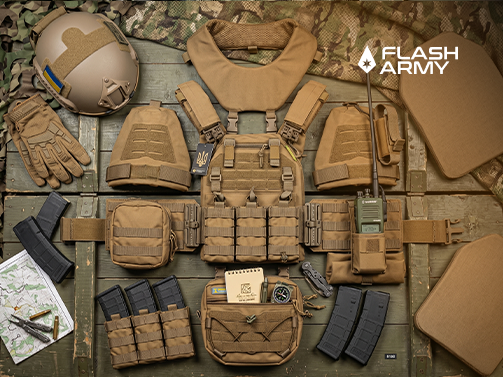
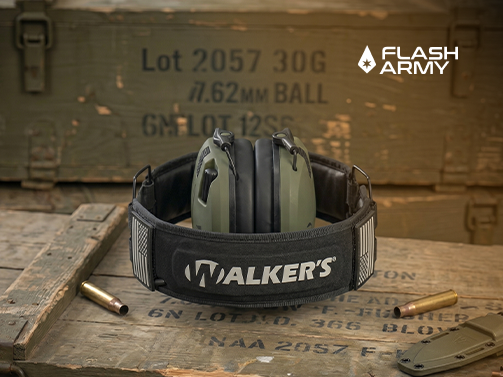
This category includes a helmet, protective goggles, gloves, and other elements that reduce the risk of injury. They do not add comfort but significantly increase the chances of staying protected. That is why they should not be considered secondary. Also, depending on the circumstances and conditions, taking into account environmental risks, a gas mask may be added - to protect breathing in case of a chemical attack.
Protection should be comfortable, not hinder movement, and not cause fatigue. Proven military accessories, created with practical use in mind, help in selecting such items.
Tactical Medicine
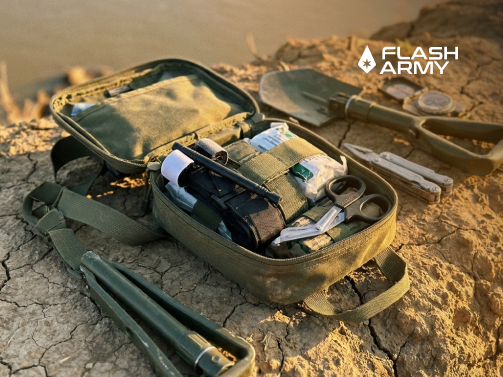
Tactical medicine is not a regular home first-aid kit. It is one of the most important sections of the kit. Tourniquets, dressings, hemostatic agents, and basic medications are the minimum without which a backpack is considered incomplete.
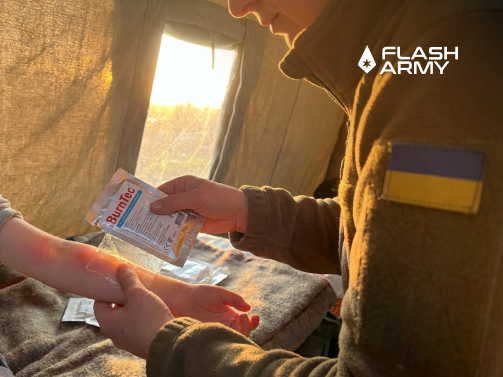
A basic tactical first-aid kit includes: tourniquets, tactical scissors, hemostatics and bandages, occlusive dressings, bandages, sterile gloves, thermal blankets, burn wipes, pneumothorax treatment devices, individual first-aid packets, and, of course, a marker to indicate the time of tourniquet application.
It is equally important to know exactly where each element is located. In a critical moment, there is no time to search or remember. That is why the first-aid kit is organized logically, not just thrown together. Practice shows that ready-made solutions from Flash Army often save time and reduce the risk of errors.
Food and Water
Water is the basis of autonomy. Without it, efficiency drops very quickly. A go-bag should always contain a supply of water or a hydration system that allows you to drink on the go without stopping.
Food is selected based on calorie content and simplicity. It's not about taste, but about energy. MREs, energy bars, concentrated foods are the optimal option for field conditions. They do not take up much space and provide the necessary resources.
Clothing and Gear
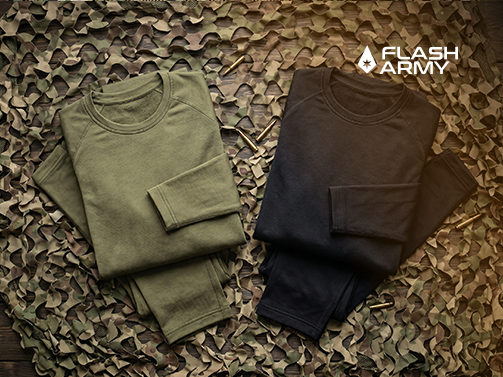
Spare clothing is an important survival nuance. Dry underwear or a warm layer can critically affect a person's condition, especially in cold or wet weather. That is why this point is often underestimated - and for good reason.
Materials should be lightweight, durable, and quick-drying. Compactness here is no less important than thermal insulation. Properly packed clothing takes up minimal space and does not hinder access to other items.
Tools and Technical Means
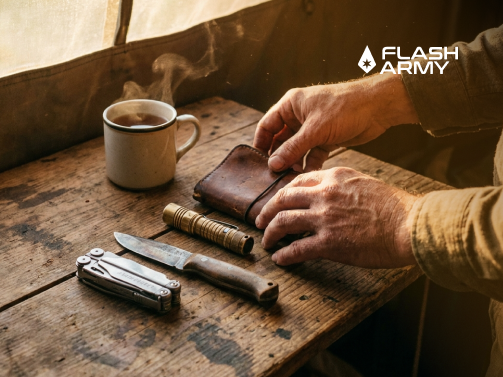
A multi-tool, knife, flashlight, navigation aids - a basic set that is used constantly. These are things that help with small details, but overall effectiveness is made up of small details.
Technical means should be simple. Complex gadgets often fail or require time for maintenance. Reliability and clarity are the main criteria for this part of the go-bag's contents.
Additional Equipment
Additional equipment includes items that are not used daily but can be crucial. Signaling devices, rope, electrical tape, a notebook - all this takes up minimal space but expands capabilities in an emergency situation.
Standards and Recommendations
Compliance with NATO and Ukrainian Standards
A modern bug-out bag is assembled considering NATO standards and the requirements of Ukrainian realities. These define not only the list of equipment but also the principles of its placement. This simplifies interaction between units and increases overall effectiveness. A unified approach allows for quicker orientation with equipment even in unfamiliar conditions.
How to Avoid Overloading Your Backpack
Overloading is one of the most common mistakes. To avoid it, follow these simple rules:
- Do not carry duplicate items unnecessarily.
- Choose multi-functional items.
- Regularly review the contents of your backpack.
Proper weight distribution also matters. Heavy items are placed closer to the back, lighter ones in the upper compartments.
Practical Tips
A bug-out bag needs to be checked periodically. Expiration dates, equipment condition, packing logic – all of this can change over time. Regular checks reduce the risk of unpleasant surprises at a critical moment.
Furthermore, it's important to practice working with the backpack. Practice is what shows what should be in a bug-out bag and what just takes up space. Experience is the best filter for any list.
Conclusion
A bug-out bag is not just a collection of items, but a well-thought-out system. Its purpose is to ensure autonomy, mobility, and readiness for action at any moment. The balance between necessity and weight makes it effective.
A well-chosen military bug-out bag does not overload or hinder you, but works to your advantage. Equipment that meets modern requirements, including tactical medicine elements and military accessories, can be found at Flash Army, focusing not on quantity, but on practical use.