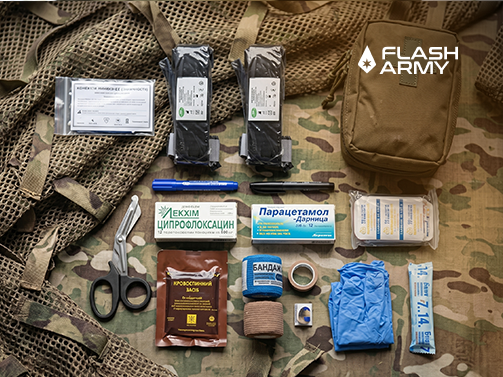
War presents military personnel with tasks that extend far beyond classic combat. A soldier must not only fire weapons and follow orders but also be able to live in field conditions, often without access to basic amenities of civilization. This is where military camping comes to the forefront, as it becomes not a leisure activity but a means of survival. When there is no permanent shelter or barracks, quality equipment allows one to maintain strength, recover, and preserve combat readiness.
Camping in wartime is not entertainment but a necessity. Field bases, temporary encampments, or hidden positions require proper organization of daily life. It is crucial for a soldier to be able to sleep in warmth, cook hot food, or dry clothes. This requires equipment that withstands harsh conditions, is easily transportable, and does not break after the first use.
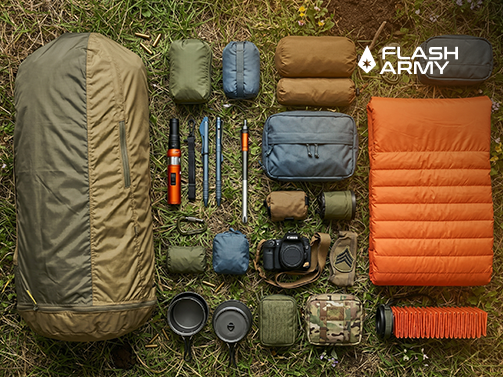
Survival in extreme conditions is impossible without preparation and appropriate means. Therefore, every unit must have a set of camping equipment: tents, sleeping bags, camping kitchenware, gas cylinders, thermoses, and other items. In this article, we will discuss how to choose survival equipment, its key elements, and why small details in the field can save lives.
Basic Principles of Survival in Extreme Conditions
In field conditions, military personnel face problems that civilians often do not even consider. This includes not only the threat from the enemy but also climate, lack of resources, or physical exhaustion. Survival in extreme conditions is based on several important principles.
- Protection from cold and heat. The body quickly loses strength if a comfortable temperature is not maintained. Therefore, sleeping bags, tents, and warm clothing become critical.
- Availability of water and food. Without water, a soldier can last only a few days. Thermoses, flasks, and water purification filters are an integral part of the equipment.
- Mobility. All equipment must be lightweight and easy to transport. The weight of the equipment often determines how much ammunition or additional items a soldier can carry.
These principles show that military camping differs significantly from tourist camping. There is no room for unnecessary items — each element must perform a specific function. If a sleeping bag does not provide warmth in sub-zero temperatures, it is simply dangerous. If a gas cylinder leaks — it is a risk to life.
Tent and Shelter
The first and most obvious piece of camping equipment is a tent. Military tents differ from tourist tents in their increased strength, resistance to rain, wind, and fire. They are made from dense materials capable of withstanding intensive use.
Key selection criteria:
- lightweight construction, so it can be carried by one soldier;
- ease of assembly in the dark or rain;
- protection from getting wet and condensation inside.
For camping in wartime conditions, tarps or camouflage nets are often used in conjunction with tents. This allows the hiding of the encampment from thermal imagers or drones. The shelter must serve not only as a place to sleep but also as protection from enemy observation.
Sleeping Bags and Warm Clothing
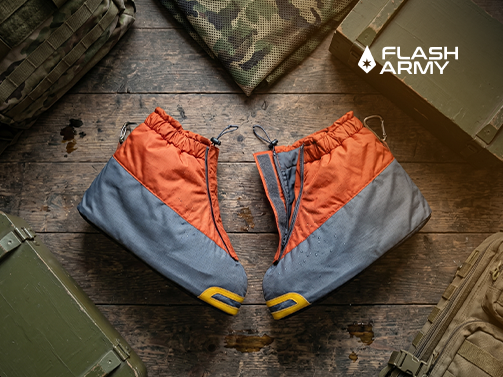
To recover, the body needs sleep. But sleeping on the ground without proper equipment is dangerous. Therefore, the standard set includes sleeping bags, sleeping pads, and cots. A sleeping bag must retain warmth even in severe frost, and the fabric must be water-resistant. In addition to a sleeping bag, warm clothing is of great importance. Camouflage uniforms protect from the external environment, but without insulating layers, a soldier risks hypothermia. The situation is especially dangerous when it is warm during the day, but the temperature drops sharply at night. Thermal underwear, fleece jackets, and insulated jackets help here.
Survival in extreme conditions is impossible without the correct selection of these items. After all, even the strongest fighter will not be able to perform tasks if they freeze or do not get enough sleep.
Kitchen Equipment and Food Preparation
Hot food in war is not a luxury but a way to conserve strength. This requires camping kitchenware: pots, pans, spoons, knives, and camping dishes. All of this must be lightweight, durable, and compact. Aluminum or titanium sets are often used, which are easy to clean and do not take up much space.
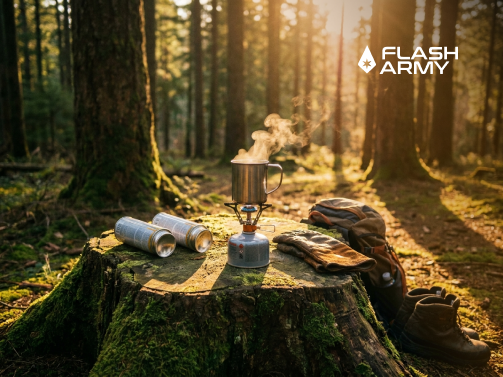
The most common option for cooking is a gas cylinder with a portable burner or a camping stove. Gas systems are convenient because they quickly heat water or food and do not leave smoke that could reveal a position. In cold weather, this is especially important, as cooking time is reduced. Additionally, a grill or field stove is sometimes used, but mostly this is an option for stationary points. In mobile conditions, compact stoves and cylinders are preferred.
Tools and Small Equipment
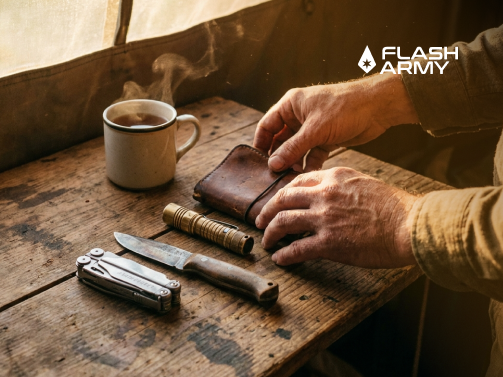
No military camping is complete without basic tools. A multi-tool comes in handy here — a multifunctional knife that combines pliers, a screwdriver, a saw, and other elements. Thanks to it, equipment can be quickly repaired or small tasks performed in the field.
Among the small equipment, flashlights, spare batteries, thermoses, and water flasks are also important. In wartime conditions, every detail affects the overall picture. For example, a quality thermos allows for a warm drink even after several hours of patrolling in the cold.
Tactical camping equipment often includes ropes, carabiners, and folding saws. They help set up camp, build shelter, or even create an improvised crossing.
How to Choose Survival Equipment
A military camp is not a tourist hike. Therefore, it is important to know how to choose survival equipment. There are several key criteria:
- Strength and reliability. All equipment must withstand impacts, rain, and temperature fluctuations.
- Compactness. Items should not take up unnecessary space. Lightweight materials reduce the load.
- Functionality. One item should combine several functions. For example, a multi-tool replaces an entire set of tools.
If the equipment is chosen incorrectly, it turns from an assistant into a problem. Excessive weight, difficulty in use, or unreliability in the cold make items useless. Therefore, military personnel need proven kits, not random goods.
Conclusion
Camping in wartime is the foundation of survival. It provides soldiers with warmth, food, the opportunity to rest and regain strength. Quality equipment reduces risks, increases mobility, and allows combat missions to be performed even in the most difficult conditions. Military camping includes tents, sleeping bags, warm clothing, gas cylinders, camping kitchenware, multi-tools, and other items. All of this together creates a system without which the full functioning of a unit is impossible.
If you are interested in reliable equipment for military or tourist expeditions, pay attention to Flash Army. Here you can find proven solutions that meet the requirements of extreme conditions and help you stay strong even in the most difficult moments.