Batteries for uninterruptible power supply have become more than just a piece of equipment today – they are the foundation of stability at home, in business, and in field positions. When outages last for hours, it is the UPS battery that takes the brunt of the impact: it powers critical devices and keeps the grid stable. In uninterruptible power supply systems, the correct battery choice directly affects the operation of the entire setup, so it's no surprise that users are increasingly asking which batteries are best for UPS and how to understand technical specifications without unnecessary complications. At Flash Army, such solutions are chosen for both home use and field tasks where maximum autonomy is required.
Types of UPS Batteries
The types of UPS batteries are the foundation of stable operation for any uninterruptible power supply. The correct choice determines how long the system can support equipment, how it will react to temperatures, and what load it can withstand. Most often, lead-acid AGM and GEL models, lithium-ion batteries, and less frequently, nickel-cadmium solutions are used in UPS. Each type has its strengths: AGM – affordability and stability, GEL – resistance to deep discharge, Li-ion – lightness and long lifespan, and NiCd – operation in challenging conditions.
Lead-Acid (AGM, GEL)
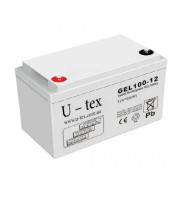
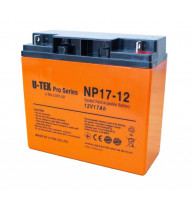
Lead-acid batteries for uninterruptible power supply remain the most common option. AGM models use a glass mat absorbent that holds the electrolyte, making them safer and more stable under load. GEL batteries have a thickened electrolyte, better tolerate deep discharges, but are sensitive to incorrect charging. Both options are suitable as batteries for uninterruptible power supply units, especially in systems that operate cyclically.
Such UPS batteries have an affordable price, stably handle backup power, and provide predictable operating time. There are also disadvantages: they are heavier than lithium batteries, have a shorter service life, and wear out faster at elevated temperatures. However, for home UPS or office tasks, AGM and GEL still remain optimal.
Lithium-Ion (Li-ion)
Lithium-ion batteries for UPS are gradually becoming the standard. They are lightweight, compact, have higher capacity and cycle life. In military positions or mobile points, such batteries are often chosen precisely because of the combination of low weight and long operation. For a UPS battery, this is important, as equipment may frequently be moved.
The advantage of Li-ion is that even after prolonged use, they maintain a stable voltage, do not "sag," and provide longer autonomous power. The downside is the high price, but it is compensated by wear resistance.
Nickel-Cadmium (NiCd)
Nickel-cadmium batteries are less commonly used in household UPS, but in industry, they are valued for their operation at low temperatures and stability. Such batteries can work where others simply refuse to start. They require proper charging cycles but are noted for their true endurance.
Comparison: service life, weight, environmental friendliness
- AGM/GEL - democratic price, average lifespan, significant weight.
- Li-ion - longest service life, minimal weight, more environmentally friendly.
- NiCd - durability and stability, but require charging control and are more complex to dispose of.
How to Choose the Right Battery
To choose the right UPS battery, you need to determine what equipment it should support and how long the backup power should operate. This will help select the required capacity and battery type. Next, it is important to consider the temperature regime and compatibility with a specific UPS model – different systems require different voltage and form factors. When choosing a battery, it is worth looking for a balance between lifespan, reliability, and price to ensure the system operates stably at any moment.
Defining Needs
Before buying a battery for an uninterruptible power supply, it is important to understand exactly what tasks it needs to perform. Does it need to power only a router, or an entire station with several devices? Is short-term backup power needed, or long-term autonomy in case of prolonged outages? The more precisely the requirements are formulated, the easier it is to choose a model that will meet the actual loads.
Calculating Power and Backup Time
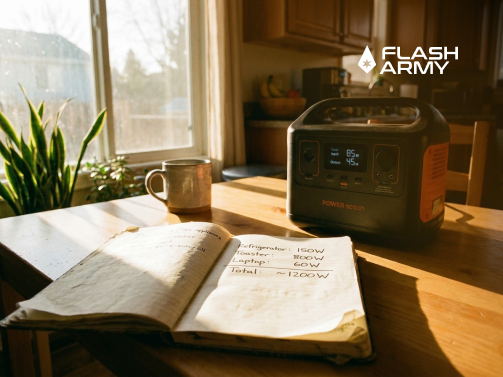
For backup power systems, it is important to know how many watts devices consume and for how long autonomous power needs to be provided. The calculation is simple: total consumption is multiplied by the desired operating time and divided by the battery's operating voltage. This helps estimate the necessary capacity and choose UPS batteries that will not be overloaded.
Considering Temperature Regime
A battery wears out faster if it operates in conditions of overheating or excessive cold. For field conditions or unheated premises, AGM or NiCd are better suited, as they tolerate temperature fluctuations more calmly. In home conditions, it is optimal to use Li-ion, as they provide stable operating time at normal temperatures.
Application Scenarios
The use of batteries for uninterruptible power supply is very broad: for home, businesses, military positions, and beyond. Especially with the onset of power outages, being always connected is more relevant than ever.
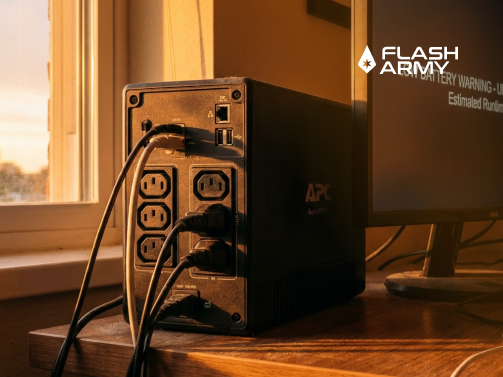
Home backup power systems usually require low capacity but high stability. UPS batteries here help avoid internet outages, save data on laptops, and maintain minimal lighting.
For Business: Servers, POS Terminals, Security Systems
For businesses, continuity of operations is crucial, so backup power is not just a matter of comfort but also financial security. UPS batteries ensure the stability of all critical processes, and correctly chosen capacity minimizes downtime risks.
For Military and Field Conditions: Mobile Command Posts, Communications
In field conditions, power must be reliable and predictable. Autonomy, temperature resistance, and quick replacement capability come to the forefront here. Rechargeable batteries combined with mobile UPS units form complete systems for supporting communications and equipment operation.
Conclusion
A UPS battery is not just a consumable; it is the foundation of stable equipment operation in any conditions. When choosing a battery for an uninterruptible power supply, it is important to consider the type, capacity, temperature, and usage mode. The right approach allows for creating a system that will operate for a long time, reliably, and predictably. If you need to select a kit for home, business, or field tasks, Flash Army offers all solutions, including UPS batteries and complete uninterruptible power supply systems.