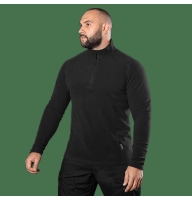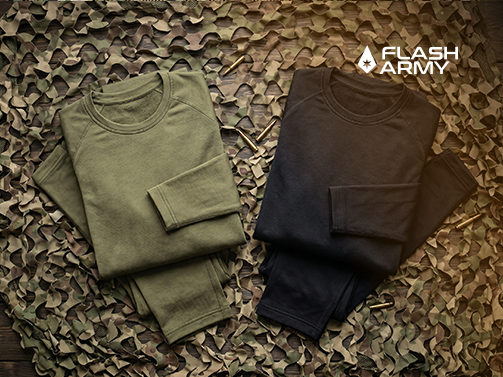
Military clothing is not just a uniform, but a functional system that must meet safety and mobility requirements. It must be comfortable and provide the soldier with protection in various weather conditions, without restricting the performance of combat or service tasks. One of the main elements of a military wardrobe is a fleece jacket.
Tactical fleece jackets are found in almost every serviceman's kit. Their popularity is due to their versatility, comfort, and adaptability to changing climate conditions. Fleece as a material is used in "second layer" clothing, which is responsible for retaining heat and wicking moisture away from the body. However, it is often worn as outerwear in warm seasons.
The Flash Army team will tell you how to choose a military fleece jacket. The article contains all the necessary information about the care, features, and advantages of this clothing.
Material Features
The main function of tactical fleeces is to ensure optimal thermoregulation, so they are made of synthetic knitted material (polyester). Its structure does not absorb moisture but wicks it away from the body, promoting quick drying. In addition, polyester is stronger and more resistant to wear.
Synthetic material is quite easy to work with. This allows for the tailoring of many comfortable styles for servicemen: long sleeves, jackets, options with pockets, with hoods, with fasteners, with inserts of other materials, etc.
Advantages of Fleece Jackets
Fleece jackets have a number of advantages, thanks to which they are chosen not only by military personnel but also by athletes and tourists.
Effective Heat Retention.
Fleece traps heated air inside its fibers, providing comfort even at low temperatures.
Lightweight.
Fleece jackets do not weigh down equipment, are easy to fold, and convenient to transport. This is especially important in field conditions.
Quick Drying.
The material does not accumulate water but wicks it outwards, which helps prevent hypothermia during active movement.
Hypoallergenic.
Wear Resistance.
Fleece does not stretch, wrinkle, or deform even after intensive washing.
Elasticity and Softness.
Breathability.
The material "breathes," but there are also options with enhanced wind protection.
Thoughtful and Functional Cut.
Versatility.
Suitable for standalone wear in cool weather, as well as an insulating layer in a multi-layer clothing system.
How to Choose a Fleece for a Soldier
Choosing a fleece jacket for a soldier is actually very simple. The first thing to pay attention to is the size, conditions of use, and the required temperature regime. This determines the color, design, and functionality you need.
Density
Fleece density usually ranges from 100–600 g/m². For winter, options with a density of 400 g/m² or more are well suited. The most common option for the military is 200–320 g/m², which is also ideal for the demi-season.
Color
Color in military clothing is primarily an element of camouflage and tactical compatibility. If colors are not regulated, you can choose a fleece based on the following principle:
- olive, coyote, khaki — versatile, work well in nature;
- multicam, pixel, sand — for specific types of terrain;
- black, blue, gray — more often for police or urban conditions.
Construction
When choosing a fleece jacket, pay attention to the details that distinguish military models from civilian ones:
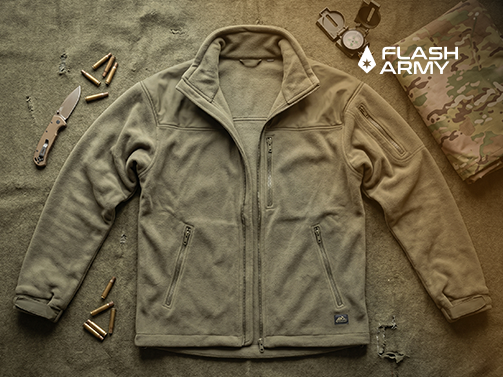
- anatomical cut ensures freedom of movement;
- high stand-up collar protects the neck from wind;
- reinforced wear zones: shoulders, elbows, and collar are often covered with durable nylon (e.g., Oxford) to protect the fleece from abrasion;
- compatibility with body armor;
- quick-access pockets, which usually have a hidden location (on the chest, sleeves, or internal);
- flat seams — to prevent chafing under equipment;
- tight-fitting cuffs.
Presence of Velcro Panels
Velcro panels are special textile hook-and-loop fasteners for attaching identification marks (chevrons, patches, etc.). They are most often located on the sleeves and chest. Such models allow for changing markings when needed.
Care for Fleece Clothing
Despite the fact that fleece is considered a rather unpretentious material, adherence to basic operating rules can significantly extend the service life of a military fleece, especially under intensive use.
We recommend following these care guidelines:
Washing.
Fleece products should be washed at a temperature of 30–40 °C on a delicate cycle, using mild detergents without aggressive components. It is advisable to avoid fabric softeners, as they can impair the material's ability to wick away moisture. To minimize surface wear, it is recommended to wash clothing inside out.
Drying and Ironing.
Fleece is best dried naturally at room temperature, as the material dries quickly on its own. Using tumble dryers or exposure to high temperatures (e.g., from hot radiators) can negatively affect the fiber structure, reducing their ability to retain heat. For the same reason, fleece clothing does not require ironing.
Storage.
Clothing should be stored in a dry place, avoiding prolonged compression, which can reduce the volume and thermal insulation properties of the fabric. If necessary, to maintain a neat appearance of the product, pills can be removed with special devices.
Conclusion
A tactical fleece jacket is part of a soldier's multi-layer wardrobe for a reason. It is responsible for ensuring comfort and thermoregulation even in extreme weather conditions. A fleece must combine thermal insulation properties, lightness, and functionality. That is why we advise paying attention to quality and proven models.
The correct choice of a fleece jacket involves considering the size, material density, style, color, and additional functional elements. Adherence to basic care rules is no less important, as it extends its service life.
You can buy a fleece jacket and other military clothing in the Flash Army online store. The website presents options from various manufacturers and materials that will suit any season and temperature regime.