It's hard to deny that a gun case has long ceased to be just an additional accessory. For many people – from military personnel to civilian owners – it's an item that directly affects safety, comfort, and even reaction speed. Interestingly, it's often the case that determines how easily a weapon can be carried, how it survives transport, and whether it remains protected in unpredictable situations. And while at first glance it's just a regular bag or case, a properly chosen option actually simplifies life significantly.
Gun cases are used in very different conditions. Some take them on hikes or to shooting ranges, others – during professional assignments or object security. Even civilian owners are increasingly choosing quality models, understanding that safety begins with basic things. And it's worth noting that manufacturers like Flash Army offer solutions that are not only practical but also meticulously designed – taking into account real-world usage conditions.
Main Types of Cases
When you start to delve into the variety of cases, it becomes clear: there is no "one size fits all." Each type has its own logic, advantages, and scope of application. Therefore, before choosing, it's worth at least briefly assessing the conditions in which the weapon will be used, how often, and by whom. Often, even a small detail – the presence of handles, a sling, or additional pockets – changes convenience significantly.
Sometimes, a person buys the first available option and then wonders why it's uncomfortable or wears out quickly. That's why it's useful to understand the clear differences between different types.
Soft Cases
Soft cases are lightweight and mobile options often chosen for short trips or shooting ranges. They are made from fabrics like Oxford, Cordura, or polyester, which withstand loads well and are not afraid of moisture. It's worth noting that soft cases don't take up much space and are suitable for those who value simplicity and light weight.
And while they don't provide absolute protection against heavy impacts, their functionality is quite sufficient for everyday tasks. Interestingly, many models have external pockets for magazines or small equipment, making them practical for training or outdoor excursions.
Hard Cases
Hard cases are a different category. They are designed for maximum protection, and their shape is usually stable and does not deform. Inside, there is often foam material that conforms to the shape of the weapon, securing it during transport. Such a gun case reliably stores it even in a car trunk or during long trips.
Of course, hard cases are heavier and bulkier, but they are chosen when protection is paramount. For example, hunters or security personnel often use these models because they withstand temperature fluctuations and mechanical pressure.
Tactical Cases with MOLLE
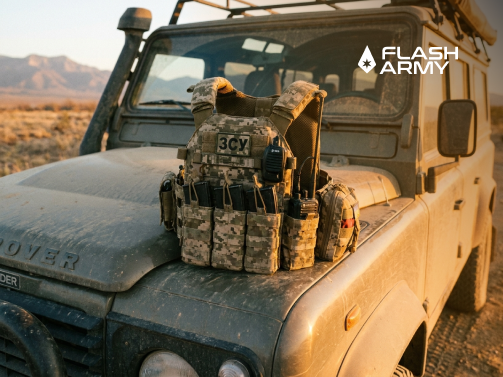
Tactical cases with MOLLE are a solution for those who value modularity. The MOLLE system allows attaching additional pouches, first-aid kits, or accessories directly to the case, creating a versatile kit for a specific task. This is convenient when you need to have many small items at hand.
Interestingly, tactical cases are very popular in military units, as they help adapt equipment to a specific situation. They are usually stronger than classic soft models and have reinforced seams.
Insulated Cases
Insulated cases are designed specifically for low temperatures. Inside, there is often a layer of thermal insulation that prevents condensation. This is very important, as moisture inside the case can negatively affect the metal parts of the weapon.
Such models are often chosen by hunters who spend a lot of time outdoors. They maintain the internal temperature, allowing weapons to be carried even in freezing weather without risk to the mechanisms.
Materials and Design Features
Material is probably the first thing to pay attention to. It determines how long the gun case will last and whether it will withstand daily loads. Cordura, nylon, polyester, or combinations of several fabrics are most often used to increase strength.
It is also important to pay attention to the quality of the lining. It can be made of soft fleece, foam material, or special shock-absorbing inserts. The better the interior is designed, the less chance the weapon will be scratched or damaged by impact if dropped.
Another point is the hardware. Zippers, carabiners, hook-and-loop fasteners, retainers. Sometimes the case itself is excellent, but cheap hardware fails first. Therefore, it is always worth inspecting the model carefully, even if it looks solid at first glance.
Safety: Weapon and User Protection
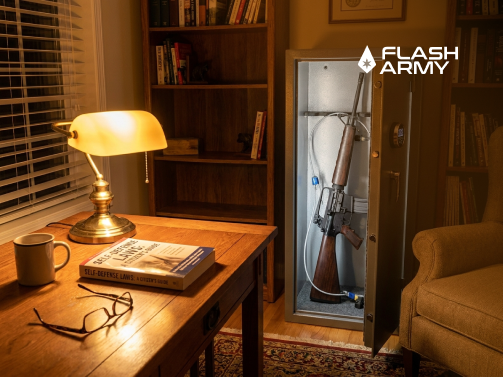
Safety is the main reason why gun cases exist at all. A properly selected model not only protects the weapon itself but also reduces risks for the person carrying it. This is especially important when working in a team or in crowded places.
Often, small details – reinforced seams, zipper protection, additional straps – form the overall reliability. When everything is done correctly, the weapon does not "rattle" inside, does not move, and does not create risks.
Protection from Mechanical Damage, Dust, Moisture
Here, everything is quite simple: a good case should protect against scratches, impacts, and external factors. Even light fabric can cope well with dust and moisture if it is properly treated. But for more complex conditions, it is worth choosing models with a water-repellent coating.
This is an important aspect for civilian owners and security structures. The presence of locks, fasteners, or hidden zippers adds confidence that the weapon will not fall into the wrong hands. This is especially relevant when transporting in public places.
Fire-resistant and waterproof materials
This is not a "feature" for show, but a real need for military personnel or hunters. Fire-resistant materials withstand high temperatures, and waterproof ones keep equipment dry even in the rain. It is worth noting that sometimes models combine several types of protection.
Reinforced zippers, locks, fasteners
Often, these determine the overall level of reliability. Reinforced zippers do not open on their own, and additional fasteners help secure the weapon tightly. These are small details, but safety is made up of such details.
Use scenarios
Interestingly, the same case can be suitable for completely different tasks, but in each scenario, different characteristics come to the fore. That is why before buying, it is worth realistically assessing your conditions: this saves time and helps avoid mistakes.
For some, mobility is important, for others - maximum protection. And there are users who need additional mounts, pockets, or a MOLLE system. And all these nuances affect the choice.
- Military operations. Here, durability, modularity, and the presence of reinforced elements are critically important. Tactical models and MOLLE cases are best suited.
- Hunting. Hunters often choose insulated models or hard cases, especially for long-distance transport.
- Object security. The main thing is quick access and reliable protection. Soft cases with additional pockets work great here.
- Civilian carry. Here, the most important thing is discretion and safe transport. Lightweight models are the best choice.
Conclusion
A weapon case is not just a convenience, but a full-fledged element of safety, mobility, and equipment organization. Its choice depends on many factors - from the type of weapon to the conditions of use and frequency of carrying. And it is very important to choose an option that will not fail in real situations.
If you want to be confident in quality, you should look at certified models. In the Flash Army catalog, you can find solutions for both professionals and civilian owners - durable, well-designed, and practice-proven.