Personal protective equipment has become an integral part of equipment in the military, law enforcement and security spheres. In modern conditions, the risks have increased, and the requirements for protection have become stricter. Most often, a person is faced with a choice between two options - a bulletproof vest or a plate carrier. Outwardly, they may look similar, but they differ in design, principle of operation and ease of use.
The choice is not just about price or weight. It is important to understand the conditions for which protection is required, how long it will be worn and what the main threats are. It is because of this that a logical question arises: what is the difference between a plate carrier and a body armor and what to choose in order not to make a mistake.
Plate carrier and body armor: the difference between means of protection
The main difference between these means is the approach to protecting the body. The bulletproof vest was originally created as a complex product that combines soft and hard protection and covers a significant part of the body. The plate carrier is a carrier of armor plates, where the main emphasis is placed on vital areas. Here, the difference of a plate-bearing body armor becomes noticeable not only on paper, but also during real use.
It is also important to consider application scenarios. Body armor is more often chosen for long-term wear in relatively static conditions. Plate carrier is better suited for active activities, when mobility and quick reaction are important. The difference also manifests itself in the possibilities of adjustment: the plate carrier allows you to flexibly change the configuration for the task, while the bulletproof vest has a more fixed design.Design and features of body armor
Considering the fact that the body armor was created as a universal means of protection, its design combines soft ballistic packages and hard armor plates, which allows it to work with different types of threats. The main emphasis is on the uniform distribution of protection throughout the torso, including the sides, and sometimes additional areas. Due to this, the bulletproof vest has a larger volume and weight, but provides a stable level of safety during long-term wear. It is the design features that determine where a bulletproof vest will be appropriate, and where it will be inferior to lighter solutions.
What is a bulletproof vest?
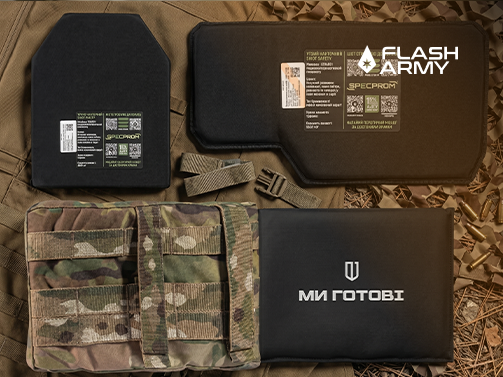
Body armor is an individual means of protection, which consists of an outer cover, soft ballistic bags and, if necessary, hard armor plates. The main purpose of a bulletproof vest is to stop bullets, debris and reduce the traumatic impact of an impact. Soft packs are made from aramid or polyethylene fibers and work against pistol calibers and shrapnel. Hard plates increase the class of protection to rifle cartridges.
Body armor construction usually covers the front, back and sides of the torso. In some models, shoulder, neck or groin protection is provided. This approach provides maximum cover, which is especially important in conditions of high debris hazard. Therefore, a bulletproof vest is considered a universal solution for a wide range of tasks.
Advantages of bulletproof vests
Body armor is valued for its balanced level of protection and relative ease of use.
A large area of body coverage reduces the risk of injury from fragments.
The soft ballistic layer effectively dissipates impact energy.The possibility of combining soft and hard protection.
Such products are well suited for long shifts or patrols. They do not require complex adjustment and are quickly put on. Considering the advantages, many users decide to buy a body armor for constant use in difficult conditions.
Disadvantages of body armor
Despite its advantages, body armor has its weaknesses.
Considerable weight when fully equipped.
Limited ventilation, especially in the warm season.
Less freedom of movement compared to a plate carrier.
During active maneuvers or long-term movement, the body armor causes fatigue more quickly. This is important to consider if protection is needed for more than just static tasks.
Design and features of plate carriers
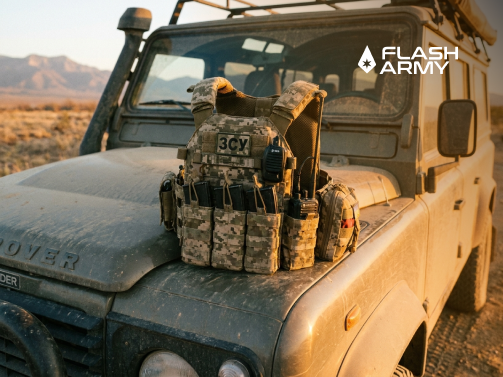
Plate carrier appeared as a response to the need for more mobile and flexible protection. It is based on a simple design, where there are no extra elements that burden the movement. The main principle of the plate carrier is to protect vital areas without overloading with equipment. That is why it has become popular among those who work in a constantly changing environment. Compared to classic body armor, the plate carrier looks lighter and more compact. This is immediately felt during prolonged wear.
What is a plate carrier
A plate carrier is a lightweight armor plate carrier that focuses on protecting vital organs. It consists of a front and back panel with plate pockets and adjustable shoulder and side fasteners. Soft protection is either absent or minimally used. The main protective element is solid armor plates of the appropriate class.The plate carrier was created to increase mobility and reduce the load on the soldier. Thanks to the MOLLE system, additional equipment can be easily attached to it