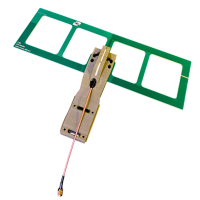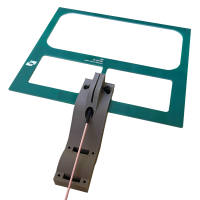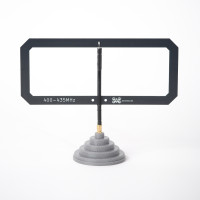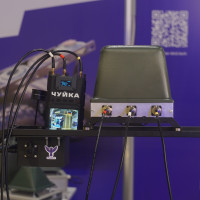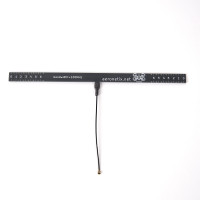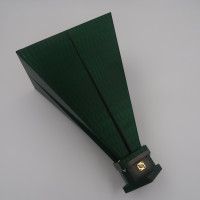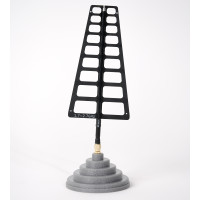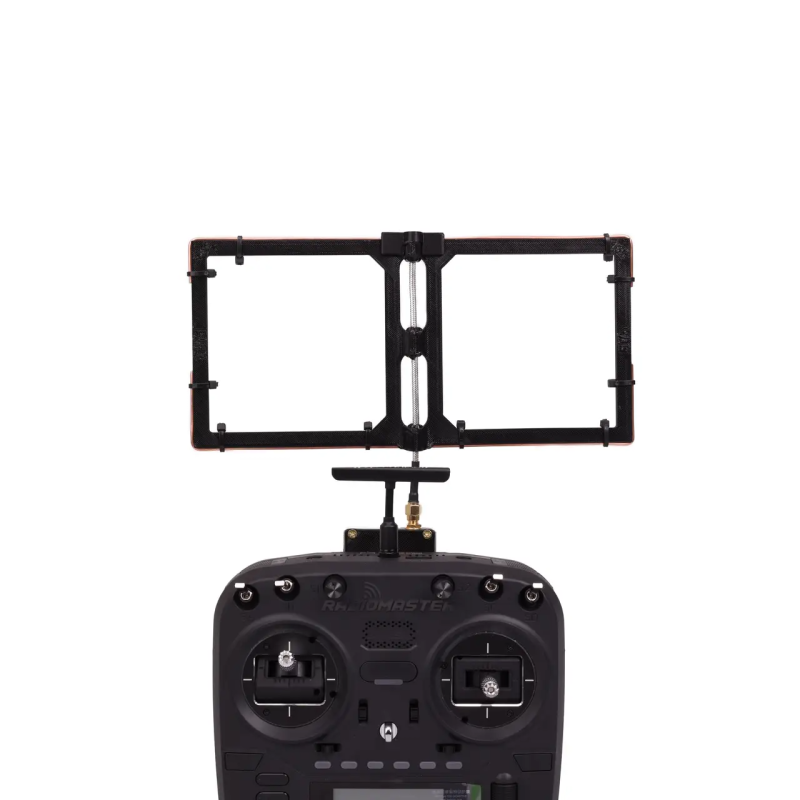






The ChDB Moxon TX Transmitter Antenna (797) is a directional ground antenna from the Ukrainian manufacturer ChDB (CherkasyDroneBud) for the TX transmitter module in UAV and UGV radio control systems. It provides a more stable signal over long distances and reduces the risk of losing control in high-density air environments — especially relevant for long-range FPV flights and operation with MIL ELRS.
The Moxon design combines compactness and higher directivity compared to a simple dipole: 5.5 dBi gain, linear polarization, 50 Ohm impedance, SMA (male) connector. Within the selected sub-band, the bandwidth with VSWR < 1.5 is 20–30 MHz.
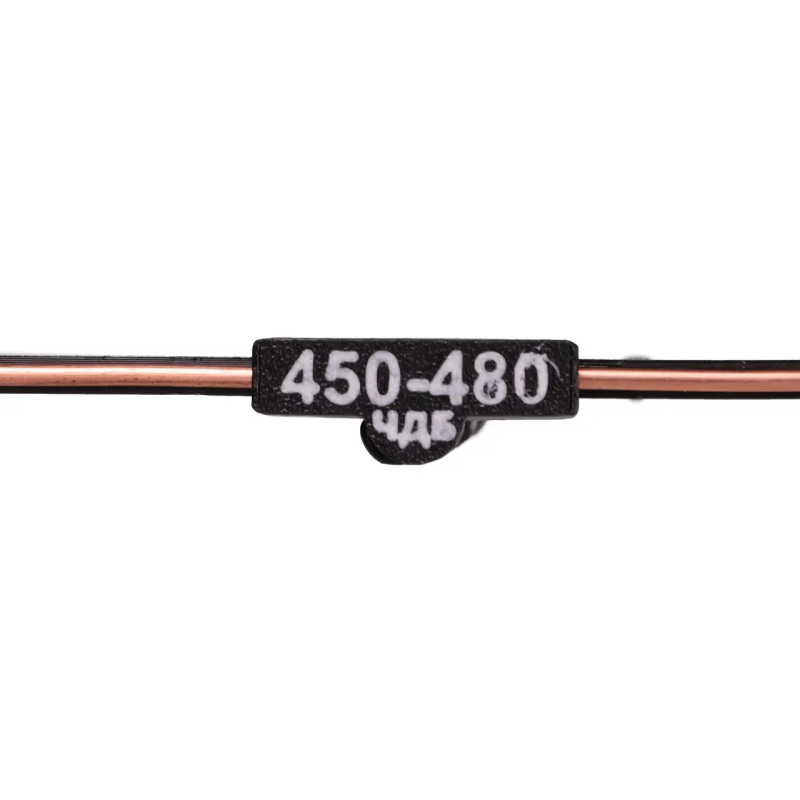
The antenna is easily installed on control panels and external transmitter modules. The operating frequency range is selected for your radio link — the manufacturer offers a range of factory settings in the approximate 370–770 MHz band (see the options table below). On the product page, specify the required sub-band in the characteristics.
Key Features
- Type: Moxon, transmitting antenna for TX.
- Directional radiation pattern — better range and control link stability.
- Gain 5.5 dBi, impedance 50 Ohm.
- Polarization: linear.
- SMA (male) connector — compatibility with TX modules with SMA.
- Bandwidth with VSWR < 1.5: 20–30 MHz (within the selected option).
- Several factory sub-bands to choose from for your ChDB system frequency.
Key Advantages
- Lower risk of losing control at long distances compared to omnidirectional antennas.
- Stability in a "noisy" environment: directivity helps filter out some extraneous signals.
- Universal mounting: control panels, external TX modules, ground stations.
- ChDB's own production: compatibility with 370–550 MHz / MIL ELRS transmitters and kits.
- Low VSWR in the 20–30 MHz operating band — efficient TX power transmission.
- Optimal frequency selection from the catalog for a specific firmware and module range.
Areas of Application
- Ground control TX transmitter for UAVs and UGVs.
- Long-range FPV flights and reconnaissance missions.
- MIL ELRS systems and ChDB radio links in the 370–770 MHz bands.
- Field control points with limited space (more compact than a large Yagi).
- Replacement or upgrade of a standard transmitter antenna for a new module frequency.
Available Frequency Options (ChDB Catalog)
Select the option that matches your TX settings. Specify the exact range in the product characteristics on the website.
| Code / Designation | Range, MHz |
| 380 | 370–390 |
| 405 | 390–420 |
| 433 | 420–450 |
| 465 | 450–480 |
| 485 | 465–495 |
| 500 | 500–530 |
| 560 | 540–560 |
| 750 | 730–770 |
Package Contents
- Moxon TX antenna with SMA (male) connector.
Technical Specifications (Common for all variants)
| Parameter | Value |
| Product Type | Transmitting antenna (Moxon) for TX |
| SKU (base) | 797 |
| Brand | ChDB (Ukraine, own production) |
| Antenna Type | Moxon (directional) |
| Frequency Range | Selectable: 370–390; 390–420; 420–450; 450–480; 465–495; 500–530; 540–560; 730–770 MHz |
| Bandwidth (VSWR < 1.5) | 20–30 MHz |
| Gain | 5.5 dBi |
| Polarization | Linear |
| Impedance | 50 Ohm |
| Connector | SMA (male) |
| Purpose | TX transmitter; remote control / external module |
Operation Warnings
- Choose the antenna variant strictly for your TX frequency — an unsuitable sub-band sharply increases VSWR and degrades range.
- Orient the Moxon towards the flight zone (direction to the UAV); you may need to reorient the antenna if the operator's position changes.
- Do not overtighten the SMA connector — tighten without misalignment, use a quality adapter if necessary.
- Keep the antenna away from metal structures and screens that deform the radiation pattern.
The ChDB Moxon TX antenna is a practical way to enhance the ground control link: directivity, 5.5 dBi, and a wide selection of sub-bands allow you to choose an antenna for a specific radio link without compromising on range.
See other products in this category in the Moxon Antennas for Military section.
There are no reviews for this product, be the first to leave your review.
No questions about this product, be the first and ask your question.
-200x200.jpg "Moxon Antenna 433 MHz")