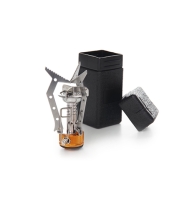
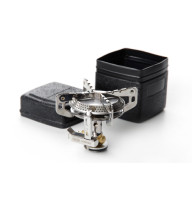
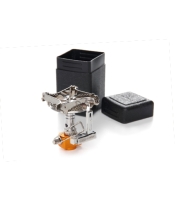
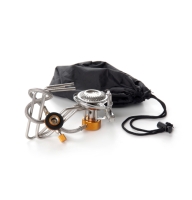
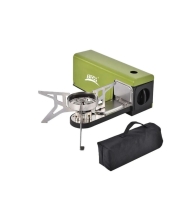
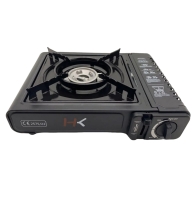
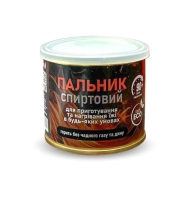
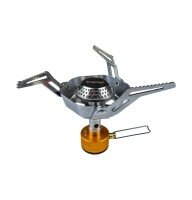
Anyone who's into hiking or regularly goes on camping trips always has a gas burner in their backpack. Out in the wilderness, there usually aren't proper conditions for cooking. Building a campfire can be inconvenient, prohibited, or impossible due to weather conditions, and snack bars alone won't replace a proper meal. That's exactly when a gas burner comes in handy.
This compact and lightweight solution is used for cooking meals, boiling water for hot drinks, and preparing freeze-dried food. That's why gas burners are popular not just among campers and climbers, but also among anglers and military personnel.
If you're an outdoor enthusiast or heading out on your first trip, this article will be useful for you. In it, the Flash Army team has gathered the main recommendations for choosing and using portable gas burners.
What Is a Camping Gas Burner
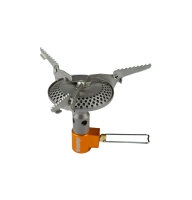
Camping gas burners are portable devices that run on gas fuel, designed for cooking, boiling water, and providing heat when there's no stationary kitchen available.
The operating principle is based on the controlled combustion of liquefied gas from a canister. Propane, butane, or their mixtures are fed from the canister through a valve to the burner nozzle. Once the gas supply is opened, it mixes with air in a special chamber, forming a combustible mixture. This produces a stable flame you can use for your needs.
Main Functions
A camping gas burner is a substitute for a campfire when there's no stationary kitchen or electricity available. Let's take a closer look at what else you can use it for.
Cooking Food
Burners let you cook hot meals anywhere. They heat cookware evenly, allowing you to boil, fry, or reheat food.
Heating Water and Drinks
One of the key functions is quickly boiling water for tea, coffee, or freeze-dried food (which hikers bring along on almost every trip).
Use in Field Conditions
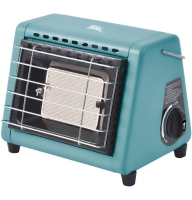
Besides cooking food and drinks, gas burners can be used to provide localized heating for a small space, such as a tent. However, it's important to follow safety guidelines and install special attachments on the device.
Another important function is melting snow and ice. This makes it easy to get water for practical purposes during winter or at high altitude.
Main Types of Burners
Before buying a camping gas burner, we recommend getting familiar with the different types, since each option has its own features and suits different usage conditions.
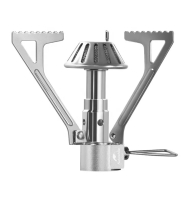
Screw-On Canister Burners
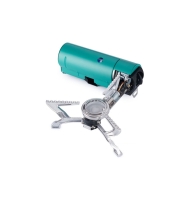
Burners that screw directly onto a canister are lightweight devices (weighing 45 to 120 grams) that attach to the gas container via a special thread. With an adapter, they can also be connected to cheaper clamp-style canisters. They're particularly convenient for solo hiking, since they can become unstable when used with larger cookware (for preparing meals for several people).
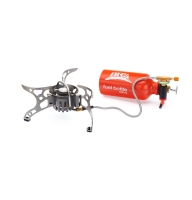
Hose-Connected Burners
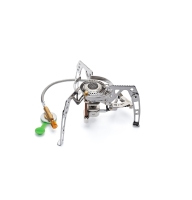
In these models, the burner connects to the gas canister via a flexible hose. Thanks to wide legs resting on the ground and a low center of gravity, large pots and pans can be safely placed on top. This provides better structural stability and allows the canister to be positioned separately from the combustion area. That's exactly why these options are considered safer.
On top of that, gas canisters can be flipped upside down if the burner has a special fuel pre-heating system, which allows it to work even in sub-zero temperatures.
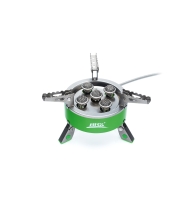
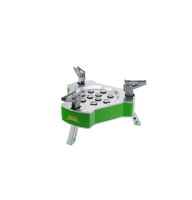
Portable Stoves
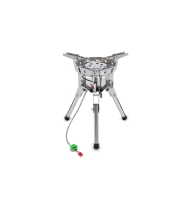
These models are the largest, as they resemble miniature kitchen stoves. They feature several burners or, more often, one wide cooking surface. They can be connected to either small clamp-style canisters or larger external ones (via a hose). Of all the options, portable stoves are the most stable.
How to Use a Gas Burner
Using gas burners is actually very simple. The only thing you need to keep in mind is safety rules. Here's a step-by-step guide:
- Set the burner on a flat surface.
Before use, make sure the burner is placed on a stable, non-flammable surface. This will help prevent the cookware or the device itself from tipping over.
- Connect the gas canister.
- For threaded canisters: screw the burner onto the thread clockwise until it's snug, but don't over-tighten it, to avoid damaging the rubber seal.
- For clamp-style (pin-type) canisters: align the notch on the canister's ring with the tab on the burner, insert the canister, and turn it clockwise into the "lock" position. If you're using an adapter, make sure all connections are securely (airtight) fitted.
- Open the gas supply.
Slowly turn the gas supply regulator (you'll hear a light hissing sound). Don't open it too abruptly, to avoid excessive fuel release.
- Light it.
If the model has piezo ignition, simply press the ignition button. Otherwise, use matches or a lighter.
- Adjust the flame.
Use the regulator to set the desired flame intensity.
- Turn it off.
After use, fully shut off the gas supply and wait 5–10 minutes for the burner to cool down.
What else is important to remember?
- Before lighting it for the first time, check all connection points by coating them with a soapy solution. If bubbles appear, this means gas is leaking, and the system shouldn't be used.
- Use the burner in a well-ventilated area.
- Only use the types of canisters specified by your burner's manufacturer. Clamp-style canisters are strictly prohibited from being refilled.
Conclusion
In short, camping gas burners significantly increase comfort during hikes, fishing trips, camping, and other outdoor activities. They allow users to quickly cook food, boil water, and meet basic everyday needs even far from civilization. The key is choosing the right type of burner, using compatible canisters, and following safety guidelines.
You can buy camping gas burners at the Flash Army online store. The catalog features options in various sizes and types from different manufacturers.