Modern warfare has changed – it's not just bullets from an assault rifle as shown in movies; technology is rapidly evolving in the military sphere. Now, the main threat comes not only from missile attacks of various calibers but also from various types of drones. Just ten years ago, a drone was associated with hobbies and beautiful aerial videos. Now, it's a potential threat. UAVs are used for reconnaissance, delivering explosives, disrupting infrastructure, or even espionage.
So, anti-drone weapons are no longer a novelty – they have become a real tool for protection.
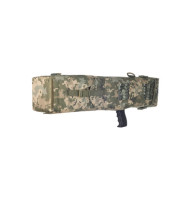
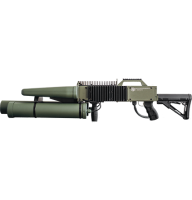
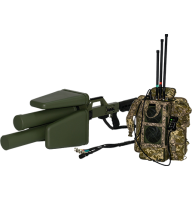
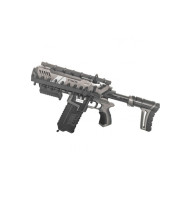
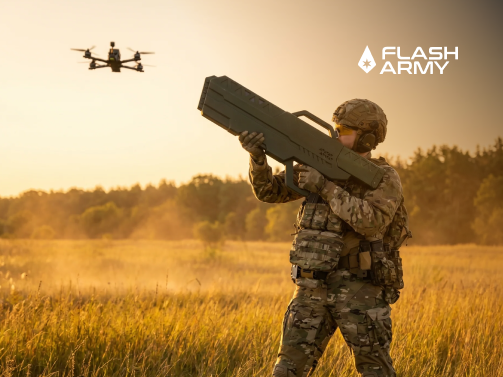
One of the most effective ways to combat unwanted UAVs is anti-drone rifles – special systems that neutralize a drone without physical destruction.
What is an anti-drone rifle and how does it work?
An anti-drone rifle is not a weapon in the classical sense. It doesn't shoot bullets, doesn't explode, and doesn't physically break the drone. Its task is to "jam" the UAV electronically, meaning to deprive it of the ability to be controlled by an operator's signal or a navigation system.
The principle of operation is simple:
- the rifle creates radio interference in the frequency bands on which the drone operates (1.5, 2.4, and 5.8 GHz);
- the UAV loses connection, hovers in the air, or returns to its starting point;
- in some models, it's possible to spoof a false GPS signal to direct the device to a safe area.
The main advantage of this method is safety. Unlike firearms or net guns, these rifles do not create debris and pose no risk to nearby people.
Technical specifications: what to pay attention to
To choose an anti-drone rifle, it's important to understand which parameters determine its effectiveness.
Range
Standard models operate within 500 meters to 2 kilometers. In open terrain – more, in urban conditions – less.
Jamming frequencies
Most drones use 2.4 GHz and 5.8 GHz for communication and 1.5 GHz (L1) for GPS. A good rifle should block all these frequencies simultaneously.
Power
The range depends on it. However, excessive power can affect civilian communication channels, so it's better if the device has adjustable modes.
Autonomy
The average continuous operating time is 60-120 minutes. Some models feature replaceable batteries, allowing for longer operation without recharging.
Weight and ergonomics
The weight of quality anti-drone rifles ranges from 3 to 8 kg. Convenient handle placement and body balance are key to comfortable operator work.
Advantages of anti-drone rifles
- Safety. The drone does not explode or fall from a height – it simply loses control.
- Instant reaction. A few seconds are enough for complete neutralization of the device.
- Mobility. Most models are portable and can be transported in a regular case.
- Accuracy. Thanks to directional antennas, jamming affects only the target, without interfering with neighboring systems.
- Cost-effectiveness. Electronic warfare is cheaper than full-fledged air defense.
Limitations and challenges
Despite their effectiveness, anti-drone rifles have certain limitations that must be considered:
- Autonomous drones do not always react to jamming – they may continue flying along a pre-programmed route.
- Weather conditions (rain, fog, strong wind) reduce the range.
- Legal aspects. In civilian zones, working with radio interference is regulated by law.
- Professional training. The operator must understand how to adjust frequencies to avoid creating side effects.
That's why it's important to invest not only in purchasing but also in training specialists who will work with such systems.
Popular anti-drone rifle models
More and more rifles are appearing on the market, but only proven brands demonstrate true effectiveness. Let's look at a few examples.
KVERTUS anti-drone rifle
- Ukrainian development combining high power and ease of use.
- Range – up to 2 km depending on the model, support for multiple frequencies simultaneously, operating time – 80 minutes.
- The antenna is narrow-beam, so the impact is localized – without interference to civilian communications.
- The KVERTUS anti-drone rifle is actively used by the Armed Forces of Ukraine and private security structures.
RIFF-P InterProinvest anti-drone rifle
Also a Ukrainian-developed model. Its characteristics are similar to the previous KVERTUS rifle. Range up to 3 km depending on operating conditions, support for GPS, GLONASS, GALILEO, BEIDOU, 2.4 Wi-Fi, 5.8 Wi-Fi, and Bluetooth. Operating time up to 60 minutes. Weight no more than 6 kg, ensuring comfortable operator work.
Detailed specifications for all models can be found in the Anti-drone rifles section on the Flash Army website.
How to choose an anti-drone rifle: key criteria
When choosing, several key factors should be considered:
- Range. For military use – from 1 km, for object protection – 500 m is sufficient.
- Frequency bands. The more frequencies the device covers, the more versatile it is in application.
- Weight. If working for a long time – every kilogram matters.
- Certification. Check for documents allowing official use.
- Integration. It is desirable that the rifle can work together with a drone detection system or radars.
Practical tips for operation
- Do not use the device near hospitals or airports without permission.
- Keep antennas clean – dust and moisture reduce efficiency.
- Conduct staff training every six months.
Regular maintenance extends the device's service life and increases the chances of stopping a dangerous drone in time.
Prospects for the Development of Anti-Drone Systems
Today, anti-drone guns have already become part of comprehensive protection systems. They are combined with radars, cameras, and drone detectors that automatically identify threats.
In the future, intelligent guns are expected to emerge that will independently determine the type of drone and the optimal jamming mode. And, as practice shows, Ukrainian developers are among the leaders in this field. An example is the KVERTUS anti-drone gun, which is constantly being improved in accordance with real combat needs.
Conclusion
Anti-drone guns are not just a trendy technology, but a necessary weapon against drones in the modern world. They allow for quick neutralization of UAVs without risk to people and with minimal environmental impact.
The choice of a specific model depends on the task, conditions, and budget, but the main thing is to purchase tested equipment from reliable suppliers. Flash Army offers a wide range of anti-drone guns for various scenarios – from military to civilian.