All about product
Description
Specification
Reviews
1
Questions1


Product Code: 68801-
In Stock
10 000 грн.
Buy this product in 1 click:
Main specifications
Detection range:
100–150 m (depending on weather conditions)
Device type:
Acoustic UAV Detection Module (DroneAlertNet)
Features:
Real-time UAV detection; Direction finding (determining the angular direction to the drone); Operation via local web interface (no internet required); Cloud connection (monitoring, control, OTA updates); REST API for integration with external systems; Transmission of device coordinates and status; Real-time display of detection angle
How it works:
Acoustic spectral analysis of UAV signal with detection of presence and angular direction to target
Interfaces / Connectivity:
Ethernet (sealed connector, full isolation); UART (via USB interface, optional); REST API (JSON); Cloud connection via internet
All specifications
We will deliver this product:

Payment




Bought together with

Description
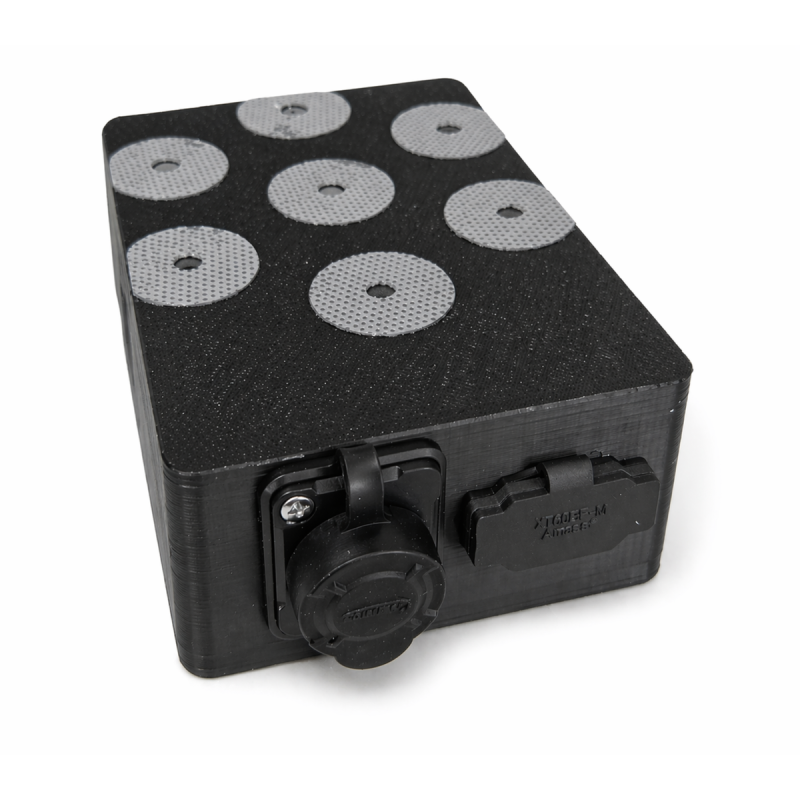
DroneAlertNet — Acoustic Drone Detection Module
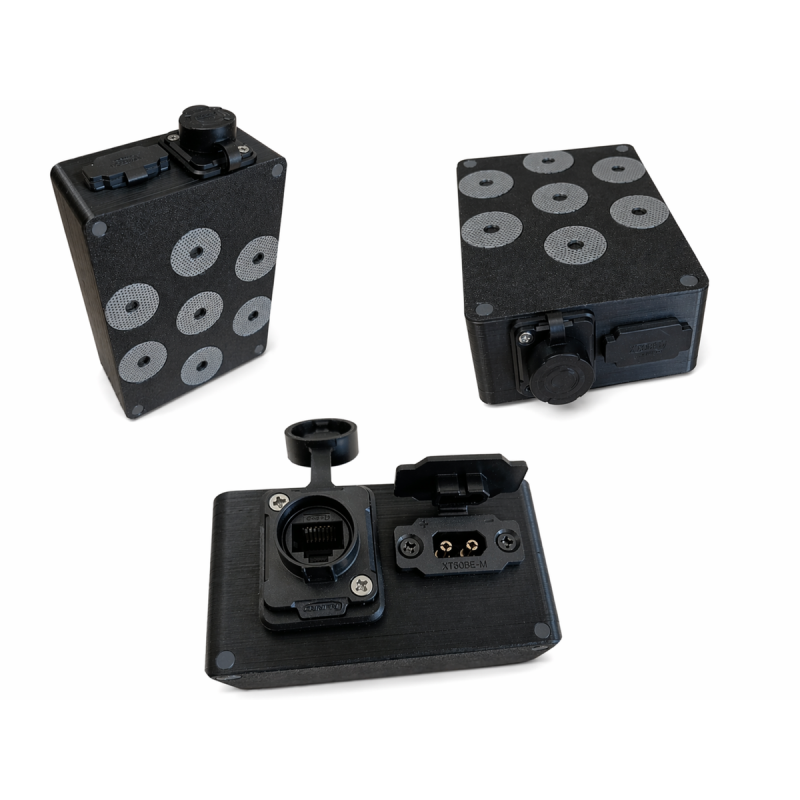
DroneAlertNet — is an acoustic UAV detection system that uses a 7-microphone array to determine the drone's flight direction. It operates via an Ethernet connection and displays events in a real-time web interface.
One module determines the direction to the target, while a network of 2–3 modules allows for localizing the exact drone location on the map. For maximum accuracy, modules are recommended to be placed in a triangle, approximately 50 meters apart.
How to launch the system:
- Connect power.
- Connect the Ethernet cable to the module and router or Starlink.
- Register on the website.
- See where the drone is flying on the map.
Specifications
| Parameter | Value |
| Detection range | 100–150 m (depends on weather conditions) |
| Angle determination error | ±5% |
| Power supply | 2S–4S battery via XT-60 connector |
| Enclosure protection rating | IP55 |
| Connection | Ethernet (sealed connector — full watertightness) |
| Optional power | 6S battery or USB 5V |
| Optional interface (USB) | UART |
Functionality
Detection and Direction Finding The module analyzes the acoustic signal in real-time and determines both the presence of a UAV and its angular direction.
Web Service (Cloud-based) With internet access, the device connects to a cloud platform that provides:
- current module status with coordinate binding
- remote device control
- OTA software updates
Local Interface A web interface displaying the detection angle is available via the local IP address — no internet required.
REST API The module provides a standard REST API with JSON-formatted responses, allowing integration with other systems.
Optional Configuration
- 6S battery power — for extended installations
- USB 5V power + data transfer via UART — for embedded or stationary solutions
**** We recommend purchasing a kit of 3 or 5 detectors to see the exact drone location on the map.
Specifications
Detection range
100–150 m (depending on weather conditions)
Device type
Acoustic UAV Detection Module (DroneAlertNet)
Features
Real-time UAV detection; Direction finding (determining the angular direction to the drone); Operation via local web interface (no internet required); Cloud connection (monitoring, control, OTA updates); REST API for integration with external systems; Transmission of device coordinates and status; Real-time display of detection angle
How it works
Acoustic spectral analysis of UAV signal with detection of presence and angular direction to target
Interfaces / Connectivity
Ethernet (sealed connector, full isolation); UART (via USB interface, optional); REST API (JSON); Cloud connection via internet
Kit Contents
Acoustic module DroneAlertNet; Ethernet interface cable / connector; XT-60 power cable; Mounting hardware; (Optional) power supply / USB-UART module; Access to web interface and API
Mounting
Stationary installation / integration into surveillance systems / field deployment
Mounting type
Stationary / Field / Integration (depending on configuration)
Power Supply
2S–4S battery via XT-60; Optional: 6S battery/USB 5V
Purpose
Early detection of unmanned aerial vehicles and target direction finding
Sensitivity
High, with algorithmic signal processing and noise filtering (direction-finding accuracy ±5%)
Sensor type
Acoustic sensors (UAV sound signal microphone analysis)
Working Hours
Continuous (real-time monitoring)
Користуюся вже кілька тижнів. Пристрій компактний, самі налаштування зайняли мінімум часу. Загалом пристрій залишив хороше враження, про покупку не шкодую.
Is this review helpful?
0
Add your question and we will answer as soon as possible.
Чи можна використовувати на автомобілі?більш детальніше надайте інформацію про використання, якщо це оптоволоконний дрон як інформація потрапляє на пристрій
Answer:
Віиаємо, Віталій!Використовувати акустичний модуль виявлення дронів DroneAlertNet на автомобілі під час руху неефективно і не рекомендується, проте його можна застосовувати на транспорті під час статичних стоянок.
1. Під час руху (Неможливо/Неефективно): Зустрічний потік повітря (вітровий наддув на мікрофон), шум власного автомобільного двигуна, тертя шин об асфальт чи ґрунт створюють колосальний акустичний шум. Цей шум повністю перекриває корисний сигнал (звук дрона). Алгоритми штучного інтелекту (нейромережі) не зможуть виокремити сигнатуру БПЛА на тлі роботи автомобіля.
2. Під час стоянки (Ефективно): Якщо автомобіль заглушений і стоїть на позиції (наприклад, блокпост, мобільна вогнева група в очікуванні, замаскована техніка), модуль працює на всі 360 градусів. У такому сценарії машина слугує просто зручною та мобільною платформою (щоглою) для розгортання датчика.
Як інформація потрапляє на пристрій, якщо це оптоволоконний дрон?
Фізичний шум двигуна - > Акустичне вловлювання -> Обробка за сигнатурою (ШІ) ->Сповіщення
(Як тільки збіг знайдено, модуль передає сигнал тривоги на пульт керування, смартфон або інтегрований планшет користувача по кабелю чи локальному Bluetooth/Wi-Fi)
01 june (10:45)