Gel batteries have become a reliable foundation for military systems, civilian equipment, and commercial devices. The conditions of today's world – frequent power outages, field assignments, and operating equipment that cannot afford to stop – make GEL technology truly relevant. A gel battery (or gel cell, as it's often called) is valued for its durability, stability, and safety, as well as its ability to operate where conventional batteries quickly fail.
The Flash Army website offers various solutions to help you choose a proven and high-quality energy storage device for a specific task.
How a Gel Battery Works
To understand why a gel battery is so durable, it's worth examining its internal structure. The technology is based on the classic lead-acid principle, but instead of liquid electrolyte, a thickened gel-like mass with added silicon dioxide is used. This structure does not evaporate, does not leak, is resistant to vibrations, and significantly reduces the risks of mechanical damage.
The second key point is gas recombination. During charging and discharging, gases are formed inside the battery, but in GEL systems, they are almost completely returned to the gel. This not only increases safety but also extends the lifespan of the plates. This is why military personnel have long preferred such batteries, as stable operation is crucial in field conditions.
The Main Operating Logic of a GEL Battery:
- gel electrolyte stabilizes the system;
- gases do not escape but return;
- heating during charging is significantly lower;
- plates wear out slower.
Main Characteristics of GEL Batteries
When choosing a gel battery, it's worth paying attention to several key technical parameters that determine how well it suits your specific task.
The first parameter is capacity. It indicates how much energy the battery can deliver in one cycle. For military communication systems and portable equipment, this is critical, as not only operating time but also voltage stability must be met.
The second parameter is depth of discharge (DoD). Gel models can withstand regular discharge to 50-70% without significant loss of resource. Compared to standard acid batteries, this is a significant advantage.
Equally important is considering the cycle life. For GOOD GEL batteries, it reaches 600-800 cycles, and with proper care, even more. In cases where the system operates daily – for example, an inverter, two-way radio, or field device – this significantly extends the overall service life.
Key Characteristics of GEL Batteries:
- resistance to low and high temperatures;
- low self-discharge (approximately 2-3% per month);
- complete absence of liquid electrolyte;
- minimal risks of leakage or corrosion;
- stable operation under vibrations.
Types of Gel Batteries
By Capacity
Types of gel batteries by capacity are conditionally divided into three groups:
Small (20-40 Ah) - used in mobile equipment, portable stations, small UPS modules. They are often found in field medical kits or portable communication sets.
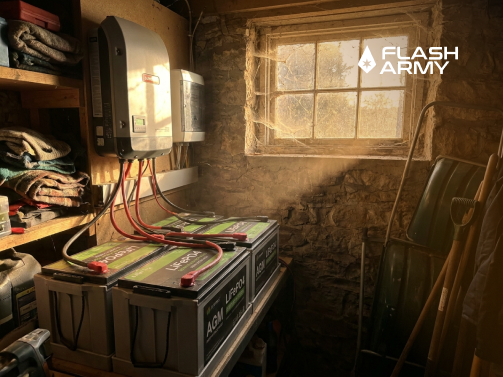
Medium (55-100 Ah) - most common in household and commercial use. Suitable for inverters, solar systems, machinery, and electrical equipment.
Large (120 Ah and more) - used where long-term autonomous power is important: in mobile command posts, military vehicles, or large-scale power stations.
By Purpose
Gel batteries are also divided by functional purpose:
- traction - for long discharge cycles, suitable for machinery and mobile systems;
- starter - for starting engines, especially in low-temperature conditions;
- universal - the most popular among Flash Army users, as they are suitable for almost everything: from power systems to backup power.
The website presents all types of battery cells, so you can choose both traction solutions and universal models for home or military tasks.
Advantages and Disadvantages of GEL Batteries
Gel batteries have become popular for a reason. Their stability in challenging conditions is the main argument for military equipment and tactical systems. The gel electrolyte does not leak even with strong impacts or tilts. Even with housing damage, the risks are minimal. This is critically important when equipment operates under constant vibrations or on uneven surfaces.
The second advantage is safety. Gel electrolyte does not release gases in large quantities, so there is no odor, leakage, or service risk. The user does not need to monitor water levels or perform maintenance – the battery operates quietly and stably for years.
However, GEL technology also has disadvantages. This type of battery is sensitive to incorrect charging, so it's important to know exactly how to charge a gel battery. Also, their price is higher than classic acid models, but considering the lifespan, the difference pays off.
Advantages of GEL:
- stability;
- safety;
- low self-discharge;
- durability at low temperatures.
Disadvantages:
- higher initial price;
- demanding charging regimen.
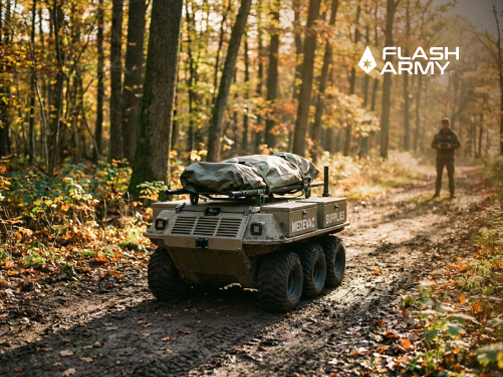
The scope of use for GEL models is very wide. In the military sphere, they are installed in mobile command posts, medical modules, radio stations, tactical communication systems, and observation and navigation equipment. Their resistance to cold and vibrations makes them suitable for almost any field situation.
In the civilian sphere, gel batteries are actively used in backup power systems, telecommunication nodes, medical equipment, alarms, autonomous lighting, and solar power stations. Commercial users appreciate their predictability: GEL rarely fails suddenly.
Key Maintenance Rules (Charging, Temperature, Storage)
One of the most important questions is how to properly charge a gel battery. GEL models require a charger with a dedicated GEL mode or adjustable voltage. Excessive voltage during charging leads to the gel drying out, so proper charging is key to longevity.
Temperature is also important. These batteries perform best in the +10 to +25°C range. In freezing temperatures, performance decreases, but a GEL battery still withstands cold better than classic lead-acid counterparts.
For storage, the battery should be left 60-70% charged, and this level should be maintained every few months. Complete "depletion" is the quickest way to shorten its lifespan.
Conclusion
The battery catalog features a wide range of GEL models for all usage conditions. You should contact Flash Army if you need to order gel batteries with fast delivery and easy payment options for individuals, entrepreneurs, public organizations, and military units.
Gel batteries combine durability, technological advancement, and safety. They are suitable for both military and civilian tasks, ensure stable equipment operation, and do not require complex maintenance. Understanding how a gel battery works, the types of gel batteries available, and how to properly charge a gel battery will help avoid mistakes and choose a model with optimal characteristics.