

Bags for Drones and Quadcopters
Sort By:
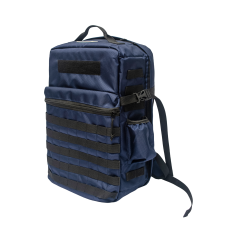
7" FPV Drone Backpack LFPV9 DronoTorba
4 700 грн.

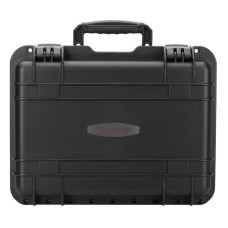
Autel EVO Max Hard Rugged Case
19 998 грн.
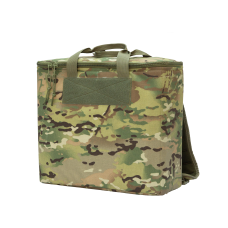
With USB warmer included TRUSB2 DronoTorba
4 600 грн.
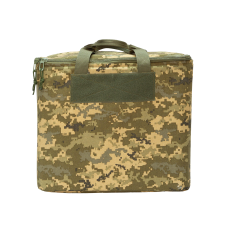
With USB warmer included TRUSB1 DronoTorba
4 600 грн.

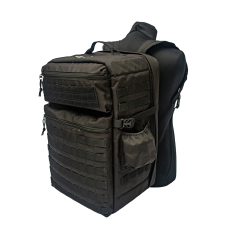

Brotherhood Drone Foam Insert Bag, Pixel
10 750 грн.
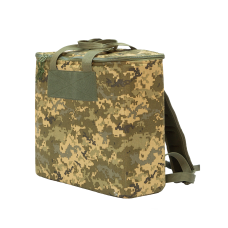
Without USB warmer TR1 DronoTorba
4 400 грн.
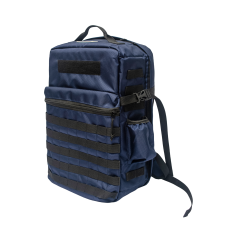
Backpack for 2–5 Mavics/Autels L9 DronoTorba
4 500 грн.
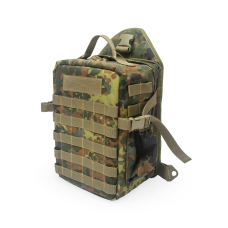

Brotherhood Drone Foam Insert Bag, Pixel
10 750 грн.
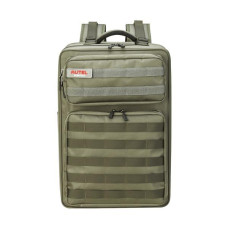
EVO Max Series Backpack
12 999 грн.
Frequently asked questions about products in this category Bags for Drones and Quadcopters
Drone bags are specialized cases, hard cases, or backpacks for carrying a quadcopter, remote controller, goggles, batteries, antennas, and small accessories. They are needed not just for convenience, but to protect equipment during transport, field operations, or storage between flights. A regular bag often doesn't hold its shape or secure the equipment, so the drone inside can collide with other items.
Drone bags are essential for safe transport, quick access to equipment, and proper organization of the entire kit. They have separate compartments for the drone, remote control, goggles, batteries, charging cables, propellers, tools, and spare parts. This is especially important in the field: when everything is in one place and not mixed up, preparation for launch takes less time.
Capacity depends on the bag format and the specific drone. There are models for one drone, for 2–3 drones, for 4–5 drones, as well as larger backpacks for 6–10 or more units of equipment. For Mavics and Autels, bags with compartments for the quadcopter itself, remote control, and batteries are more often chosen, while for FPV drones, frame dimensions, space for goggles, batteries, and spare propellers are important. In the Flash Army catalog, the filter indicates capacity from 1 drone to 11+ drones.
Drone bags are made of dense synthetic fabrics, rigid frame materials, foam inserts, plastic, water-repellent fabrics, and reinforced elements on the bottom and walls. For such a bag, not only the fabric is important, but also the shape of the internal dividers, zippers, handles, straps, and corner protection. In field operations, the bag constantly touches the ground, armor, trunk, and car floor, so weak material quickly wears out.
Drone bags are most often available in tactical and field colors: black, olive, coyote, pixel, multicam, gray, sand, flecktarn, and other camouflage options. For civilian use, color is not as critical, but for military tasks, it is better to choose a neutral or camouflage option that blends in with the rest of the gear. Flash Army lists black, olive, coyote, pixel, multicam, gray, flecktarn, and other options among the available colors.
Bags for drones are adapted to the size and shape of specific equipment. Some models are designed for Mavics or Autels, others for 7, 8, 10, or 11-inch FPV drones, and separate backpacks are made for larger professional quadcopters. Inside, there can be rigid dividers, soft organizers, cutouts for the body, pockets for batteries, and compartments for the remote control or goggles. The category page indicates compatibility with Mavic, Autel, FPV drones of various sizes, DJI Matrice, and other formats.
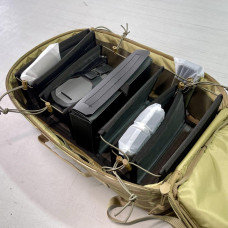
A drone backpack differs from a regular backpack in its internal organization and equipment protection. It has compartments for the drone, remote control, goggles, batteries, tools, and small spare parts, rather than one large space for everything at once. Often, a rigid frame, soft inserts, removable sections, moisture protection, or MOLLE attachments for pouches are added. A regular backpack can carry items, but it does not secure expensive equipment as needed.
In the field, a drone backpack provides order and speed. The operator doesn't waste time searching for batteries, propellers, cables, or goggles in a general backpack, because each item has its own place. It's also important that the equipment is less prone to damage during movement, in a vehicle, or when rapidly changing positions. For military tasks, dark colors, a sturdy frame, moisture protection, and the ability to carry the kit on the shoulders, leaving hands free, are beneficial.
Drone bags protect equipment with rigid walls, foam inserts, dense fabric, separate compartments, and internal fixation. The drone should not roll freely with batteries, remote control, and metal tools. A separate place is important for batteries, a soft compartment for goggles, and a shape for the remote control that does not put pressure on the sticks. Flash Army's features include a rigid frame, removable sections, compartments for the remote control and goggles, moisture protection, and water-repellent coating.
Drone bags in Ukraine cost approximately from UAH 800 for simple protective cases or basic solutions for a small kit. Backpacks for multiple drones, models with a rigid frame, organizers, moisture protection, and compartments for the remote control, goggles, and batteries cost more. The price is affected by capacity, compatibility with specific drones, materials, frame, color, number of sections, and overall configuration.
It's better to choose a drone bag at Flash Army not by its appearance, but by what it needs to carry: a single Mavic, several FPV drones, a remote control, goggles, batteries, or a complete working set. If the equipment is transported in a car and frequently taken out in the field, it's worth choosing a model with a more rigid frame and proper compartments, rather than just a soft bag without fixation. For an FPV team, it's more useful to immediately look for capacity for several drones and separate pockets for consumables, so that during an outing, equipment isn't packed into various random backpacks.