


RadioMaster TX12 MKII ELRS — Remote Control for FPV
The RadioMaster TX12 MKII ELRS remote control from the Radiomaster brand is a compact, powerful, and open-source upgradable radio system designed for quadcopter and model pilots seeking a reliable solution in a small form factor. This model combines ergonomics, modern hardware solutions, and the EdgeTX operating system, making it an ideal choice for both beginners and experienced pilots.
Advantages of RadioMaster TX12 MKII ELRS
- Ability to connect the remote to a computer for simulator practice
- Support for Bluetooth mode for connecting to phones and tablets
- Improved USB-C QC 3.0 charging
- Precise and reliable gimbals with contactless Hall sensors
- Support for external TBS Crossfire Micro, FrSky Micro, and other modules
- Pre-installed EdgeTX operating system
- Improved rear cover ergonomics and comfortable grip for S1 / S2 sliders
- SD memory card included
- Convenient switching between M1 and M2 modes
EdgeTX Operating System
The remote comes with the advanced EdgeTX operating system, which is constantly evolving and being updated. RadioMaster works closely with the EdgeTX team to implement new features and optimize user interaction. The open architecture and active community allow for regular updates and adaptations for various modules and settings, as well as the use of EdgeTX Buddy or EdgeTX Companion for connection and customization.
Gimbals with Hall Sensors
The new gimbals use contactless Hall sensors, which improve the center point position and stability with temperature changes. They do not use fast-wearing mechanical parts, thus having a longer lifespan, being less susceptible to interference, and providing high precision and smooth model control.
Simulator Support
Connecting to simulators allows practicing quadcopter control without going to the airfield, reducing the risk of damage and repair costs. Simulators provide the opportunity to experiment with settings and maneuvers in a safe environment and practice landings and takeoffs in any weather.
Increased Battery Compartment
The improved power compartment allows the use of two 18650 or 21700 Li-ion batteries, as well as 2S LiPo batteries up to 74×60×22 mm (batteries not included). This allows choosing between high capacity and compactness, and convenient battery mounting ensures stable power during flight.
Charging and Storage
The remote is equipped with USB-C charging with QC 3.0 support, ensuring fast charging. An SD card and a USB-C cable for charging, PC connection, and simulator use are included. For updates and configuration work, an SD card or USB connection to a computer can be used.
Specifications
- Model: Radio TX12 Mark II
- Size: 170 x 159 x 108 mm
- Weight: 363 g
- Frequency: 2.400 GHz - 2.480 GHz
- RF Chip: ExpressLRS (ELRS) / CC2500 protocols
- Operating Current: 320 mA at 8.4 V (ELRS) / 180 mA at 8.4 V (CC2500)
- Voltage Range: 6.6-8.4 V DC
- Radio Firmware: EdgeTX (transmitter) / ExpressLRS (RF module) / MPM (RF module)
- Channels: Up to 16 (receiver dependent)
- Display: 128*64 Monochrome LCD
- Gimbals: High-precision Hall sensor gimbals
- External Module: JR / FrSKY / Crossfire compatible
- Update Method: USB / SD card and EdgeTX Buddy online mode or EdgeTX Companion PC software
- USB Charging: QC3 USB-C
- SD Card: Included
Package Contents
- RadioMaster TX12 Mark II ELRS Radio Control System
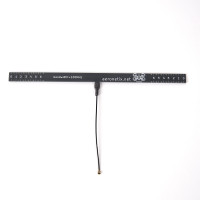
- Antenna
- SD card
- USB-C cable (charging, PC connection, simulator)
- User manual
- Stickers
Additionally required:
- 18650 Li-Ion batteries (2 pcs) or suitable size 2S Li-PO battery
Brand: Radiomaster. Product category: Drones & Quadcopters > Drone Components > Remote Controls. The RadioMaster TX12 MKII ELRS combines open-source EdgeTX software, support for modern RF protocols, and the ability to connect external modules, making it a versatile solution for FPV pilots seeking a compact, customizable, and durable remote control.
Other products in this category here Remote Controls
There are no reviews for this product, be the first to leave your review.
No questions about this product, be the first and ask your question.