

Military Quadrifilar Antennas
Sort By:
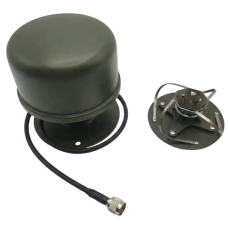
In stock
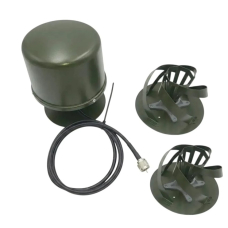
EW Antenna, 2100-3200 MHz ("Troyanda-3.0M")
4 400 грн.
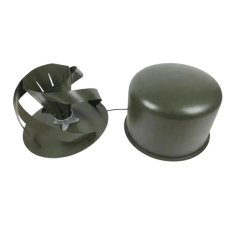
In stock
EW Antenna, 210-330MHz ("Troyanda-200K")
7 480 грн.
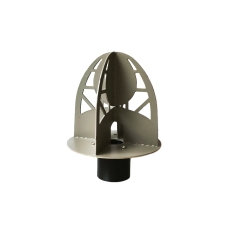
In stock
Videolink WMA-850 Dipole Antenna
3 820 грн.
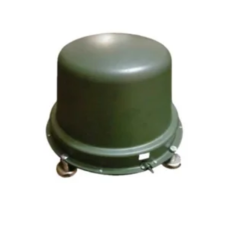
In stock
In stock
In stock
In stock
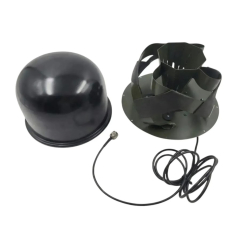
EW Antenna, 1100-2300 MHz ("Troyanda-1100+")
5 060 грн.
In stock
In stock
In stock
In stock
In stock
In stock
In stock
In stock
In stock
In stock

In stock
In stock
In stock
In stock
In stock
In stock
Videolink WMA-650 Dipole Antenna
4 265 грн.
In stock
Frequently asked questions about products in this category Military Quadrifilar Antennas
A quadrifilar antenna operates using four conductive elements arranged in a specific geometry to form a stable electromagnetic field. This design helps achieve circular polarization and more uniform coverage. It is often used where reliable signal reception is critical.
Quadrifilar antennas can be manufactured for various frequency ranges depending on the specific model and purpose, typically from 100 MHz to 3 GHz. Common solutions are designed for GPS, satellite communications, telemetry, and other systems. Before choosing, it is important to check the specifications of a particular product.
The gain of quadrifilar antennas depends on the design, size, and operating frequency, typically ranging from 1 to 5 dBi. In different models, this value can vary from moderate to elevated levels. For precise selection, it is important to consider not only the dBi but also the shape of the radiation pattern.
Quadrifilar antennas can have an open frame or a closed protective housing. For outdoor use, sealed solutions made of moisture-resistant materials are often employed. The housing format depends on the mounting conditions and operating environment.
Circular polarization helps to receive a more stable signal when the transmitter or receiver orientation changes. It can also reduce the impact of some reflected signals and interference. This makes such antennas useful for mobile or unstably oriented systems.
Quadrifilar antennas are used in satellite, navigation, telemetry, and radio communication systems. They are chosen where stable signal reception and circular polarization are required. Specific use depends on the frequency and configuration of the equipment.
The four-loop design helps create a more uniform radiation pattern and stable signal parameters. It also facilitates circular polarization. This positively affects reception quality in many use scenarios.
In specialized radio systems, such antennas are valued for signal stability, circular polarization, and the ability to operate in various equipment orientations. Specific requirements depend on the system type, frequency, and mounting conditions. For accurate selection, technical compatibility and environmental parameters are considered.
Quadrifilar antennas in Ukraine typically cost from 1,000 to 9,000 UAH, depending on the frequency range, materials, and design. Basic models are more affordable, while professional or hermetically sealed solutions are more expensive. The brand and package contents also affect the price.