

Yagi Antennas for Military Use
Sort By:
Frequently asked questions about products in this category Yagi Antennas for Military Use
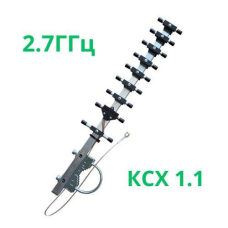
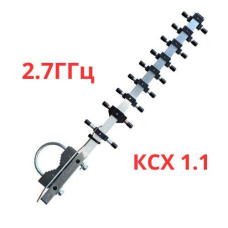
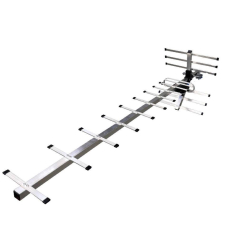
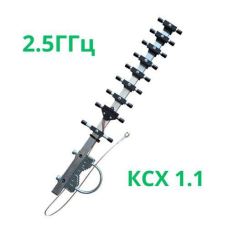
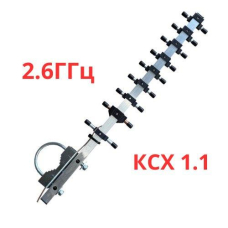
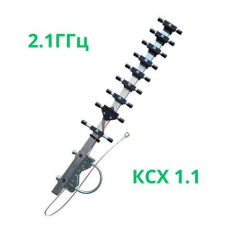
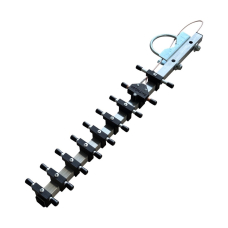
A Yagi antenna is a directional antenna consisting of an active element, a reflector, and several directors. This design concentrates the radio signal in a specific direction and reduces backward radiation.
A Yagi antenna allows you to amplify the signal in the desired sector and stabilize communication over a greater distance.
Yagi antennas are designed for a specific frequency range. Most often, they are used at frequencies of 433 MHz, 868 MHz, 915 MHz, 1.2 GHz, or 2.4 GHz. These ranges are used in FPV systems, radio communications, and drone ground control stations.
A Yagi antenna typically provides gain of approximately 7 to 15 dBi. The exact value depends on the number of directors and the length of the structure. The more elements a Yagi antenna has, the more strongly it concentrates the signal in the direction of operation.
A dipole antenna has an omnidirectional radiation pattern and transmits signals in all directions. A Yagi antenna operates directionally, focusing the signal in a specific direction. This allows a Yagi antenna to provide a higher gain compared to simple antennas.
A Yagi antenna has a narrow, directional radiation pattern. The main part of the signal propagates in front of the antenna, while backward radiation is significantly weaker. This signal shape allows for more precise work with a specific target or direction.
A Yagi antenna is often used in drone ground control stations and communication systems. It is used in FPV systems, military radio communications, or television signal reception. A Yagi antenna helps amplify the signal in a specific direction and increase the communication range.
In most cases, a Yagi antenna uses linear signal polarization. The type of polarization depends on the antenna's position during installation. If the antenna is installed vertically, the signal also has vertical polarization.
Yagi antennas are typically made of aluminum or other lightweight metals. Metal elements provide good signal conductivity and low structural weight. The frame or mounts are sometimes made of plastic or composite materials.
The Yagi antenna performs well in challenging radio environments due to its directional radiation pattern. It allows concentrating the signal in a specific direction and reducing the impact of extraneous interference sources. This feature helps achieve a more stable connection.
You can buy a Yagi antenna on the FlashArmy military equipment marketplace. You can choose different Yagi antennas depending on your needs. Before choosing, you should pay attention to the frequency range and compatibility with your equipment.