

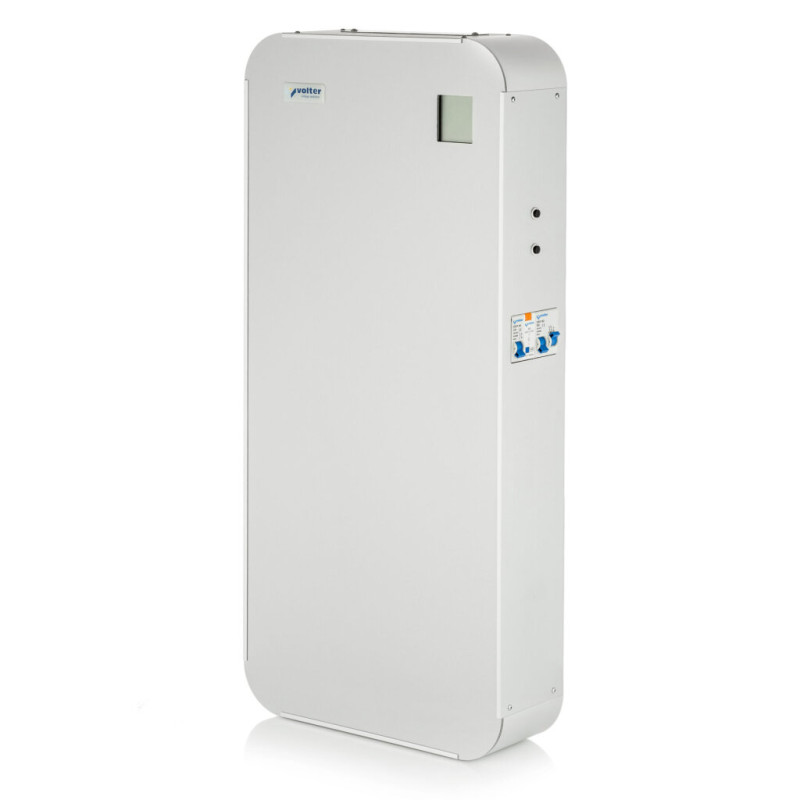
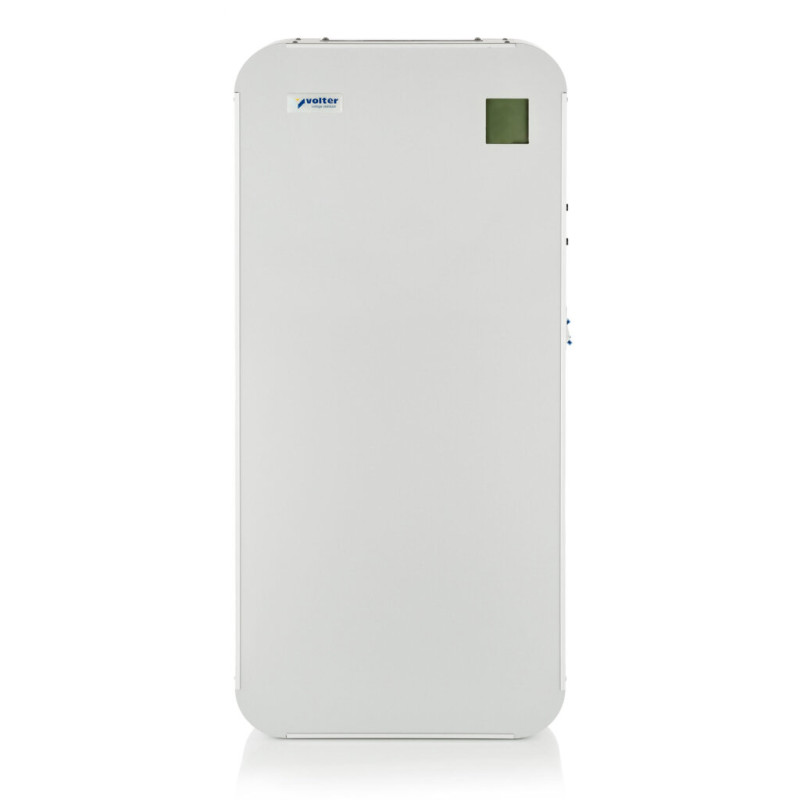
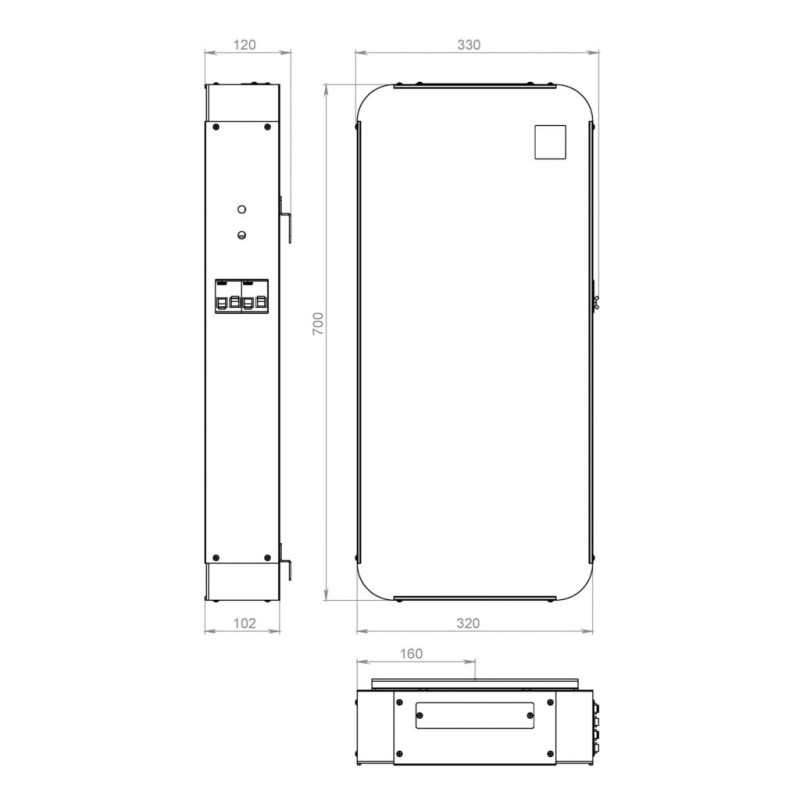






Smart On-Line — Double Conversion Principle
Smart On-Line systems are built on the double conversion principle. Double conversion is an effective way to make the output completely independent of the input power grid's condition. The power grid may have significant instability, interference, and other distortions, but this signal is converted to DC current and is not passed to the output.
Operating Principle
- First stage. Using a rectifier with a power factor corrector, capacitors are charged with a constant voltage. The power factor corrector is necessary to avoid overloading the grid with large impulse currents.
- Second stage. Using pulse-width modulation, an output AC voltage of ideal sinusoidal waveform is formed from the constant voltage.
Operational Stability
The stabilizer works equally effectively with active, capacitive, and inductive loads, maintaining a stable voltage level with a deviation of no more than 1% from the user-set value. A stable frequency of 50 Hz is also maintained, regardless of input voltage fluctuations.
Clean Signal
The stabilizer is capable of delivering a clean signal without any interference at any given moment. When connected to a generator, it ensures a correct sinusoidal voltage waveform. This is especially important when working with asynchronous motors and transformer power supplies, as a distorted voltage waveform leads to their overheating.
The constancy of the output voltage and a wide range of input voltage make stabilizers with double energy conversion an optimal solution for servers, industrial controllers, and other sensitive and critical equipment.
There are no reviews for this product, be the first to leave your review.
No questions about this product, be the first and ask your question.