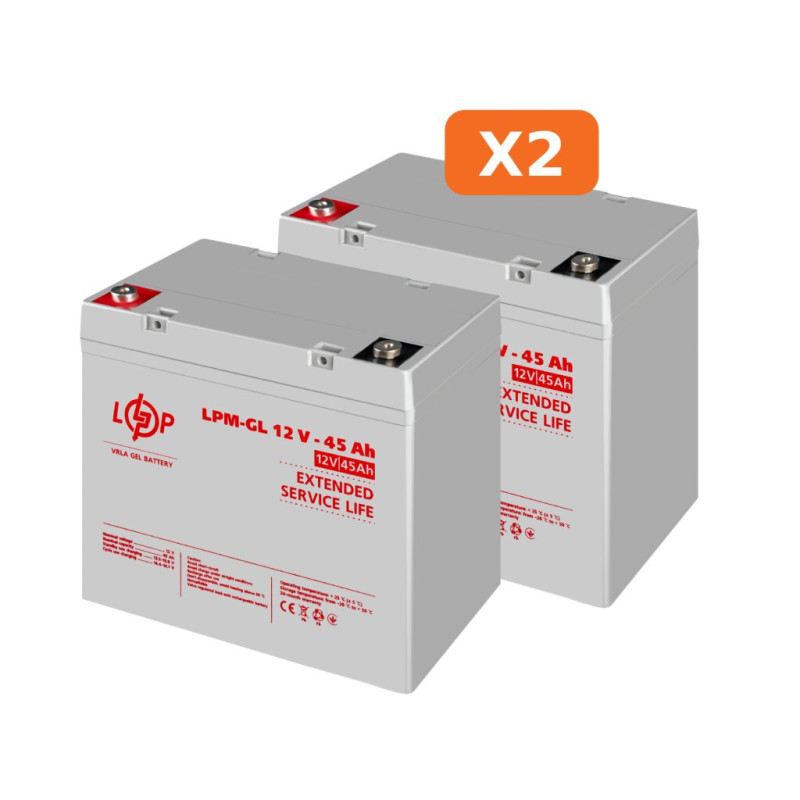
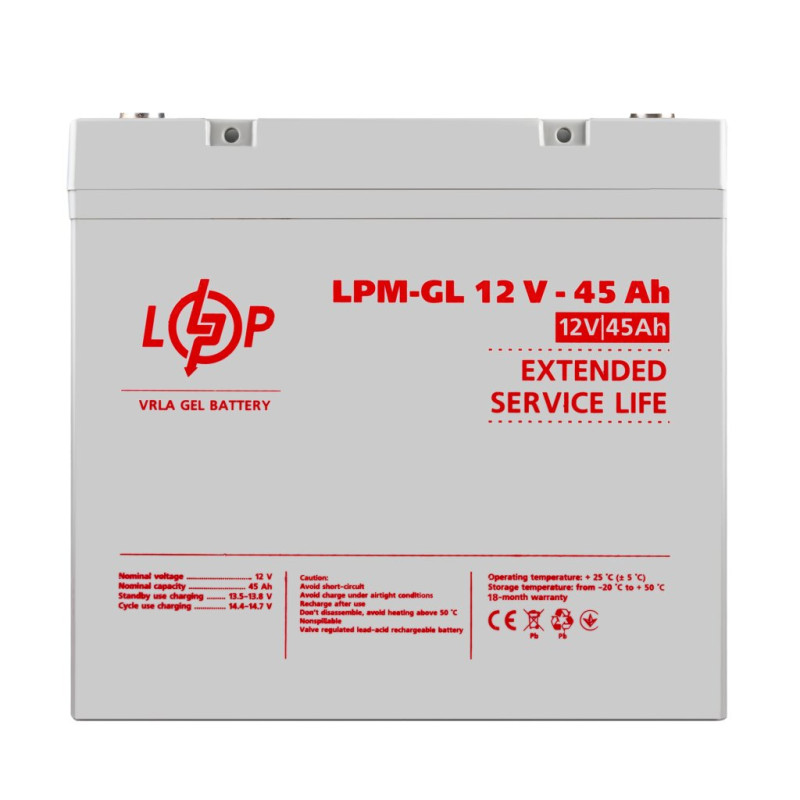






We present a battery pack that perfectly complements an uninterruptible power supply. This pack includes two 12V gel batteries with a total capacity of 90Ah (45Ah each), connected in parallel to increase capacity and total energy to 1080 watt-hours (Wh).
A gel (GEL) battery is a completely sealed power source that requires no maintenance during storage and operation.
Considering the advantages and disadvantages of a gel battery, it can be concluded that GEL-type batteries significantly outperform conventional lead-acid batteries in terms of technical parameters and operational characteristics.
Advantages of a gel battery:
- High charge/discharge cycle life (1200*) and, as a result, longer service life (on average 7-8 years, depending on operating conditions).
- The battery can be installed in residential premises. The viscous electrolyte structure and complete sealing of the casing prevent acid leakage and guarantee the absence of harmful fumes.
- In practical use, gel batteries show stable results when operating in low (-20°С) and high (+50°С) ambient temperatures. The wide operating temperature range allows GEL batteries to be used for solar power stations.
- The manufacturing technology of GEL batteries implies their ability to withstand prolonged discharge, cyclic discharge, deep discharge, and high-current discharge.
- Batteries of this type have low self-discharge rates during long-term storage and reliable self-protection against over-discharge and over-charge.
Features of gel battery production
The main feature of gel batteries is the viscous (gel-like) structure of the electrolyte.
The casing is filled with electrolyte using a vacuum pump, which allows for uniform concentration and high density of contact with the plates.
The separators that divide the lead electrodes of gel batteries are made of durable microporous material with aluminum additives. This design makes the separator resistant to vibrations and mechanical damage, as well as to the chemical effects of the aggressive acidic environment inside the battery.
After filling with electrolyte, the battery undergoes prolonged drying, during which microcracks form in the electrolyte structure. This technology allows for a several-fold reduction in the percentage of evaporating fumes.
Batteries manufactured using GEL technology, compared to AGM batteries with a similar electrolyte volume, have:
- greater capacity,
- consistently uniform reaction on all parts of the plate,
- less plate corrosion,
- high heat dissipation,
- minimal electrolyte stratification.
Gel batteries are in high demand among consumers who purchase backup power kits for heating boilers, emergency lighting systems, or autonomous water supply.
How to avoid battery capacity loss in conditions of frequent power outages?
Two important rules for caring for AGM, GEL, MG batteries:
- Do not frequently discharge the battery by more than 30% of its capacity (consider this when calculating battery capacity)
- After discharge, the battery must be fully charged with a current of 1/10 of its capacity for 10 hours
There are no reviews for this product, be the first to leave your review.
No questions about this product, be the first and ask your question.