Catalog
0
0

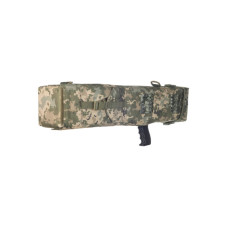
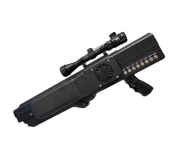
Anti-drone rifles

Sort By:
Anti-drone rifles

Anti-drone jammers

An anti-drone jammer is a mobile EW system designed for rapid neutralization of enemy UAVs. Its main advantage is ease of use and the ability to instantly respond to an aerial threat. It does not require complex setup — just aim at the target and activate the jamming. 

Purpose of jammers

Anti-drone EW jammers are indispensable in situations where mobility and quick reaction are crucial. As soon as a drone appears in sight, the operator has mere seconds to stop it. An anti-drone jammer blocks control, navigation, and video transmission signals, forcing the UAV to hover, lose connection, or return to base.

How anti-drone jammers work

Inside the anti-drone jammer's body is a directional jammer transmitter operating in the 1.5, 2.4, and 5.8 GHz bands. These frequencies correspond to the main control channels of commercial and tactical drones. The anti-drone jammer is aimed manually, but no physical damage is inflicted — the effect is achieved through radio jamming.

Advantages of anti-drone jammers and how to choose them

Modern anti-drone jammers are effective electronic warfare weapons capable of neutralizing UAVs without firing a shot.

Key features:

  •     Frequencies: 1.5, 2.4, and 5.8 GHz — to intercept most drones.
     
  •     Range: up to 2000 m.
     
  •     Battery: up to 60 min of autonomous operation, with quick replacement capability.
     
  •     Cooling: built-in coolers for stable operation.
     
  •     Weight: up to 6 kg — optimal for mobile use.
     
  •     Interface: simple switching of modes and frequencies.
     
  •     Compatibility: possibility of integration with dome EW systems.

When choosing an anti-drone jammer, focus on the frequency range, power, autonomy, and convenience in field conditions. A quality jammer should be lightweight, reliable, and capable of operating as part of a comprehensive defense system.

At Flash Army, you can buy an anti-drone jammer with an official warranty, fast delivery, and support. Our specialists will help you buy an anti-drone jammer that meets your service conditions and budget.

Expand

Frequently asked questions about products in this category Anti-drone rifles

An anti-drone rifle is a portable electronic warfare (EW) jammer designed to suppress drone control and navigation channels. It is used to protect personnel, equipment, and facilities from drones at close and medium ranges. The format allows the operator to react quickly and engage targets manually.
The device creates a directional jamming signal in the drone's control and navigation frequency bands. As a result, the UAV may lose connection with the operator, enter return-to-home mode, or make an emergency landing. The specific behavior depends on the drone's settings and the type of signal.
The average operating range of anti-drone rifles typically ranges from 300 m to 2–3 km, depending on power and environmental conditions. In open terrain, performance may be higher, while in the presence of obstacles, it may be lower. Effectiveness also depends on frequencies and target type.
The effective angle of an anti-drone rifle typically ranges from approximately 15° to 60°, depending on the antenna design. A narrower angle allows for more precise targeting, while a wider angle covers a larger area. This parameter affects aiming accuracy and suppression effectiveness.
Safe operating time depends on device power and adherence to manufacturer's instructions. In most cases, it is recommended to operate with breaks, avoiding prolonged continuous use. Using protective equipment and holding the device correctly reduces risks to the operator.
The autonomy of anti-drone rifles typically ranges from 30 minutes to 2–4 hours, depending on battery capacity and operating mode. With continuous use at maximum power, this figure may decrease. Some models support replaceable batteries.
The most commonly jammed frequencies are 2.4 GHz, 5.8 GHz, and GPS navigation frequencies in the approximate range of 1.2–1.6 GHz. Some models may additionally cover 868 MHz and 915 MHz. The specific list depends on the device configuration.
The effectiveness of an anti-drone rifle depends on the range to the target, aiming accuracy, and drone type. At close ranges, such devices can significantly affect the operation of FPV and commercial quadcopters. The result is determined by power, environmental conditions, and operator training.