

UAS

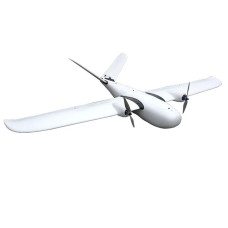


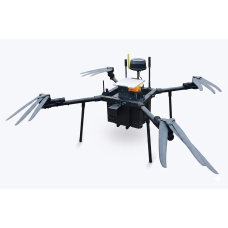
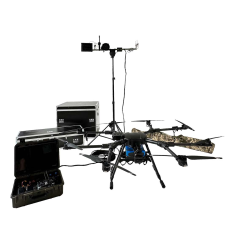

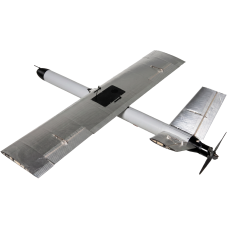




What is a UAS?
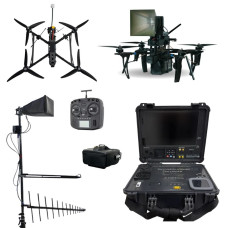
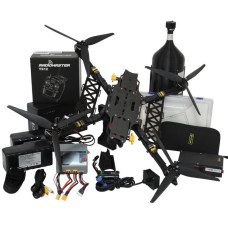
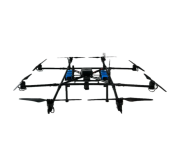
A UAS consists of one or more UAVs, ground control systems, communication systems, and flight preparation equipment. The aircraft itself is classified as a UAV, while an unmanned aerial system also includes a ground station, power supply, and equipment required for the standard operation of the aircraft. In FPV-based systems, a similar function is performed by FPV ground stations, but their configuration and communication protocols may differ from those of other UAS.
What does an unmanned aerial system consist of?
The configuration depends on the model and supply option. The following components are included as part of the package:
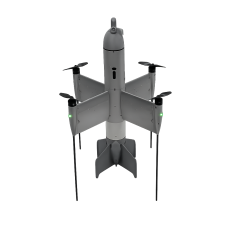
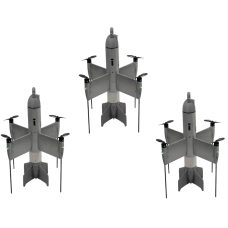
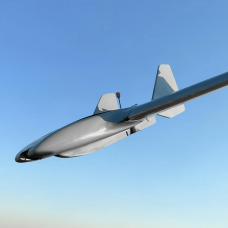
- Aircraft — a copter, fixed-wing aircraft, or VTOL with a flight controller.
- Ground station — a controller or display for control, video, and telemetry.
- Communication channel — onboard and ground antennas, receivers, and transmitters.
- Power supply — batteries, charging equipment, and cables.
- Payload — a daylight camera, thermal imaging camera, or other module.
- Spare parts — spare components and tools for the specific platform.
An FPV remote controller may be included in an FPV-based system if its communication protocol matches the installed receiver. The camera, additional batteries, or expanded spare parts may be supplied separately, so it is best to check the complete contents of a specific UAV.
What are UAS used for?
UAS are used for observation, mapping, object search, and video transmission. A copter is needed when the aircraft has to hover over a point or keep a camera focused on one sector. A fixed-wing platform suits extended routes where hovering is not required. UGVs perform remote tasks on the ground and have different terrain and mobility requirements.
A repeater drone may be included in a system when it is necessary to expand the communication area between the operator and the main aircraft. Its compatibility is checked based on operating frequencies, protocols, and the type of radio equipment installed.
Features of unmanned aerial systems
Flight time is checked alongside the installed camera: a heavier gimbal or thermal imaging camera reduces available flight time. For optics, stabilization, optical zoom, and resolution are checked. Thermal imaging modules commonly use 384×288 and 640×512 sensors. For the ground component, battery life, antennas, and the power supply configuration are important. FPV drones are configured differently, so their controllers or video equipment are not always compatible with UAS equipment.
In analog video communication systems, Pagoda antennas with circular polarization may be used. For a specific UAS, its frequency, polarization type, connector, and compatibility with the video transmitter or receiver are verified.
How to choose a UAS?
For a copter-based UAS, check the permissible camera weight, stabilized gimbal, flight time with this payload, and permissible wind speed. For a fixed-wing platform, the launch method, landing conditions, and route duration on the standard power supply are also important.
If you plan several flights, check how many batteries the kit includes and how long they take to charge. For example, one spare battery helps little if charging takes longer than a single flight. For cold-weather operation, check the operating temperature range. An unmanned aerial system is also evaluated based on the ground station configuration, spare parts kit, and availability of spare antennas and cables.
Drone repair kits are selected to match the specific aircraft and its components. They may include tools, fasteners, cables, and spare parts needed to service the platform in the field.
Where to buy an unmanned aerial system?
The cost of a UAS depends on what's included in the delivery. An additional aircraft, thermal imaging camera, several battery sets, or another ground station can significantly change both the price and capabilities of the system. At Flash Army, you can select a UAS with the required configuration and check the number of aircraft, optics, power reserve, ground equipment, and spare parts kit. For the same aircraft, a different number of spare batteries or a different camera already means a different operating capacity between charges.